
Equipment catalogue
What Qing knows how to buy — and what it will refuse to
42 categories are refused at the catalogue, not escalated
A PRC-incorporated entity cannot lawfully be the seller of an advanced-computing item (ECCN 3A090 / 4A090) to any destination worldwide, non-US manufacture does not escape the Foreign Direct Product Rule, and every credible PRC accelerator vendor is Entity Listed. Qing refuses at the catalogue rather than opening a conversation and escalating, because the conversation itself creates a record. See the compliance perimeter →
12 near-duplicate pairs need curating — they are why a matched requirement sometimes comes back ambiguous
The importer collapses pure reorderings and empty qualifiers automatically. It will not decide whether “(x86)” distinguishes a product — that depends on whether an ARM variant exists, and guessing wrong destroys a real distinction. These are left for a human.
- 1.001U dual-socket rack server (x86)↔2U dual-socket rack server (x86)
- 1.001U tool-less ball-bearing slide rail kit↔2U tool-less ball-bearing slide rail kit
- 1.00Active optical cable (AOC), 400G/800G↔Active optical cable (AOC), 400G/800G, 3-30 m
- 1.00Cable management arm (CMA) 1U/2U↔Cable management arm (CMA)
- 1.00Enterprise NVMe SSD, U.2/E1.S/E3.S, 3.84-30.72 TB↔Enterprise NVMe SSD, E3.S
- 1.00Enterprise NVMe SSD, U.2/U.3↔Enterprise NVMe SSD, U.2/E1.S/E3.S, 3.84-30.72 TB
- 1.00Enterprise NVMe SSD, U.2/U.3↔Enterprise NVMe SSD, E3.S
- 1.00General-purpose 2U dual-socket rack server↔1U dual-socket rack server
- 1.00High-capacity QLC NVMe SSD↔E1.L NVMe QLC high-capacity SSD
- 1.00Type 2 surge protective device↔Surge protective device, Type 1+2 and Type 2
- 0.88Rear-door heat exchanger, active (fan-assisted)↔Rear-door heat exchanger, active (fan-assisted), 60-100 kW
- 0.88Single-phase immersion dielectric fluid, synthetic ester base↔Single-phase immersion dielectric fluid (synthetic hydrocarbon / ester)
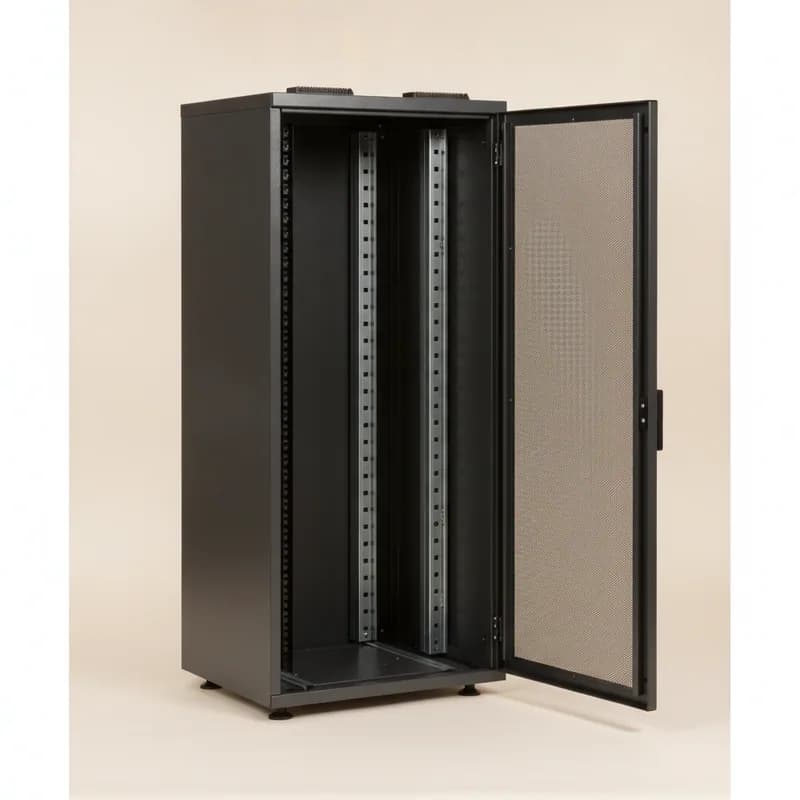
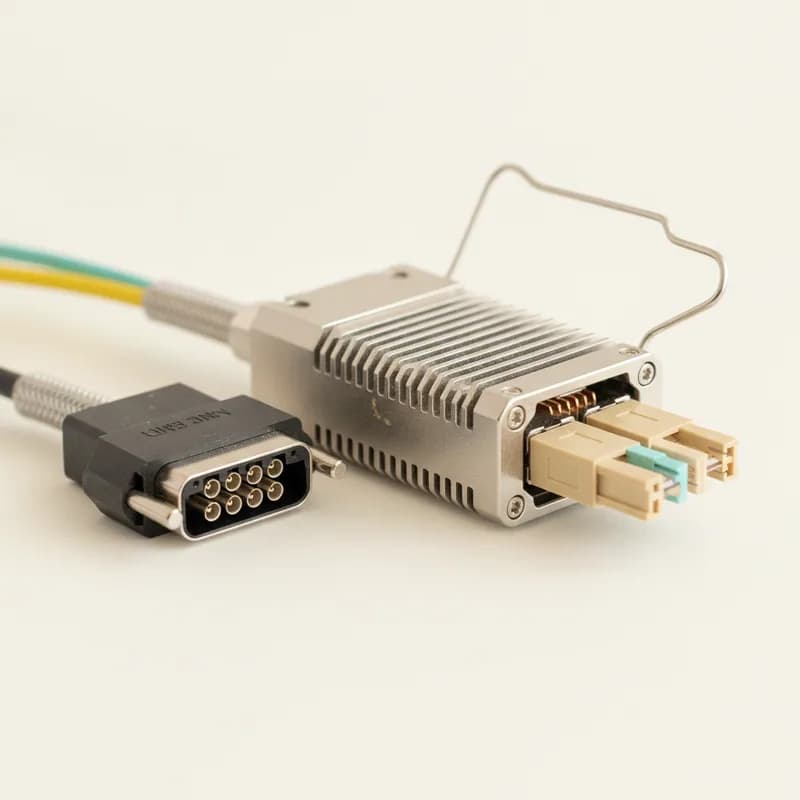
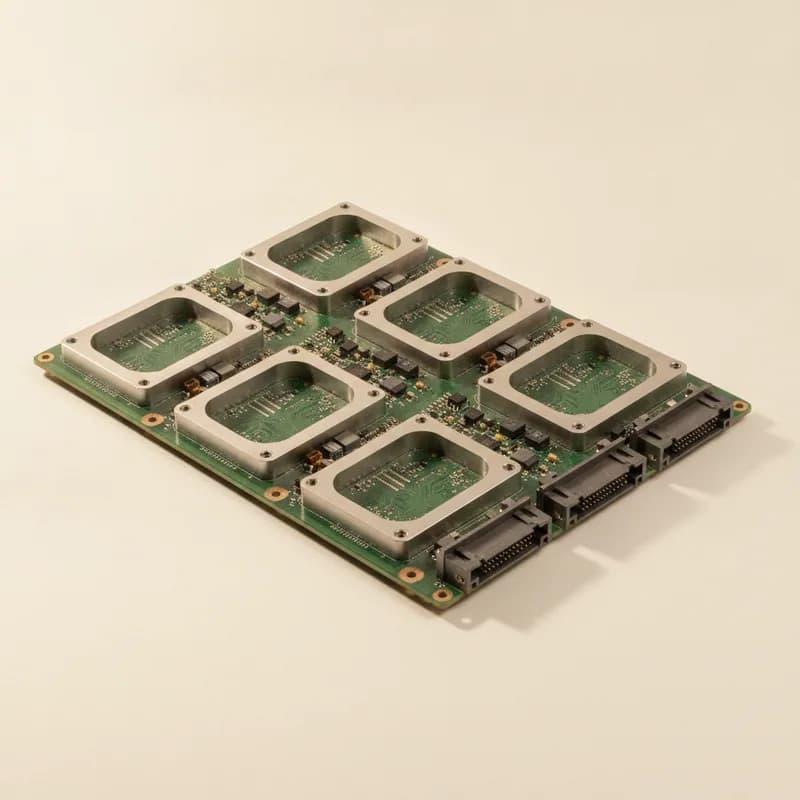

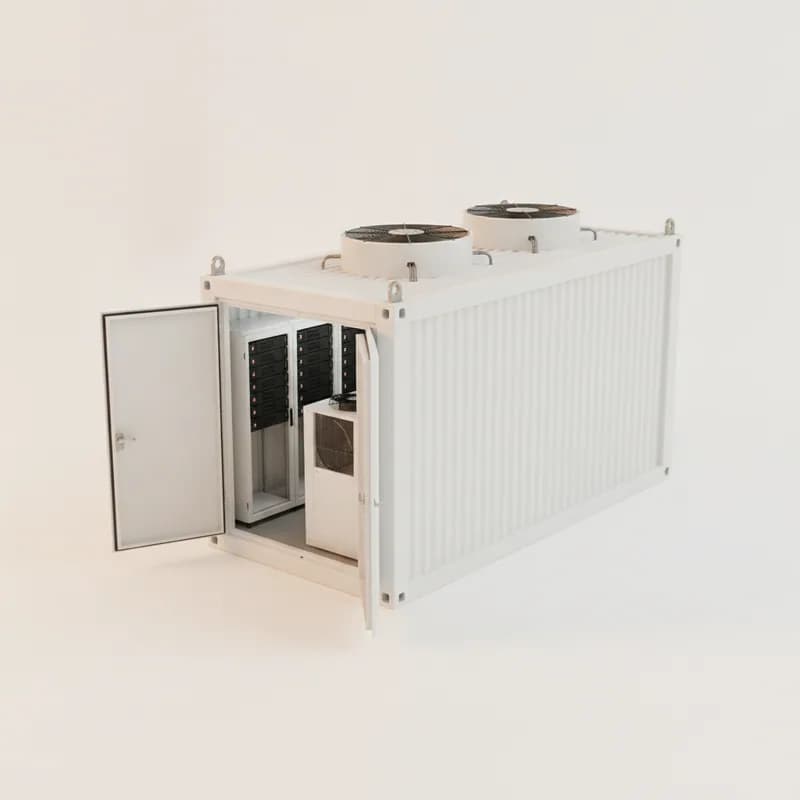
All categories
Each carries the questions that make two quotes comparable, and the traps specific to it
- unrestricted0U/1U horizontal cable manager (finger duct)机柜理线器/走线槽White spaceHS 8473.30per pcCN supply: strong
7 ways buyers get burned here
- Integration scope left as one word. 'Integrated rack' can mean an upright, cabled, tested rack or a cabinet on a pallet with the servers in cartons beside it. Force a line-by-line yes/no on racking, cabling, labelling, config, firmware alignment and rack-level test, and pin the L-level (L6/L10/L11/L12).
- Missing rails. Rails are chassis-specific and rack-specific. A quote that lists servers but no rail part number will arrive with no way to mount them. Ask for the rail PN, the post type, the mounting depth range and the load rating, and demand the chassis side-hole drawing.
- CMA and rail quoted as one item, delivered as one item. Cable management arms are almost never included by default. Same for the adapter bracket needed on round-hole or threaded racks.
- Rails not rated for loaded shipment. A rail rated 38kg static is not necessarily rated to ship with a server in it. If the rack ships upright, the rail rating and the shipping rating are two different questions.
- 'Metered PDU' covering four different products. Inlet metering, per-bank metering and per-outlet metering are sold under the same phrase. Without the accuracy class (IEC 62053-21 Class 1 = ±1%) the numbers cannot be used for chargeback.
- PDU physically will not fit. 0U PDU body length versus the rack's clear internal height, and PDU depth versus cable bend radius behind the servers. Ask for body length in mm, not just '0U'.
- Wrong input plug for the destination. Chinese factories default to CN or generic plugs. The input plug standard, cord length and the destination's certification (UL vs CE vs CCC) must be stated per shipment.
- unrestricted0U inlet-metered PDU0U计量型PDUPowerHS 8537.10per pcCN supply: moderate
7 ways buyers get burned here
- Integration scope left as one word. 'Integrated rack' can mean an upright, cabled, tested rack or a cabinet on a pallet with the servers in cartons beside it. Force a line-by-line yes/no on racking, cabling, labelling, config, firmware alignment and rack-level test, and pin the L-level (L6/L10/L11/L12).
- Missing rails. Rails are chassis-specific and rack-specific. A quote that lists servers but no rail part number will arrive with no way to mount them. Ask for the rail PN, the post type, the mounting depth range and the load rating, and demand the chassis side-hole drawing.
- CMA and rail quoted as one item, delivered as one item. Cable management arms are almost never included by default. Same for the adapter bracket needed on round-hole or threaded racks.
- Rails not rated for loaded shipment. A rail rated 38kg static is not necessarily rated to ship with a server in it. If the rack ships upright, the rail rating and the shipping rating are two different questions.
- 'Metered PDU' covering four different products. Inlet metering, per-bank metering and per-outlet metering are sold under the same phrase. Without the accuracy class (IEC 62053-21 Class 1 = ±1%) the numbers cannot be used for chargeback.
- PDU physically will not fit. 0U PDU body length versus the rack's clear internal height, and PDU depth versus cable bend radius behind the servers. Ask for body length in mm, not just '0U'.
- Wrong input plug for the destination. Chinese factories default to CN or generic plugs. The input plug standard, cord length and the destination's certification (UL vs CE vs CCC) must be stated per shipment.
- unrestricted0U outlet-metered PDU0U每位计量PDUPowerHS 8537.10per pcCN supply: strong
7 ways buyers get burned here
- Integration scope left as one word. 'Integrated rack' can mean an upright, cabled, tested rack or a cabinet on a pallet with the servers in cartons beside it. Force a line-by-line yes/no on racking, cabling, labelling, config, firmware alignment and rack-level test, and pin the L-level (L6/L10/L11/L12).
- Missing rails. Rails are chassis-specific and rack-specific. A quote that lists servers but no rail part number will arrive with no way to mount them. Ask for the rail PN, the post type, the mounting depth range and the load rating, and demand the chassis side-hole drawing.
- CMA and rail quoted as one item, delivered as one item. Cable management arms are almost never included by default. Same for the adapter bracket needed on round-hole or threaded racks.
- Rails not rated for loaded shipment. A rail rated 38kg static is not necessarily rated to ship with a server in it. If the rack ships upright, the rail rating and the shipping rating are two different questions.
- 'Metered PDU' covering four different products. Inlet metering, per-bank metering and per-outlet metering are sold under the same phrase. Without the accuracy class (IEC 62053-21 Class 1 = ±1%) the numbers cannot be used for chargeback.
- PDU physically will not fit. 0U PDU body length versus the rack's clear internal height, and PDU depth versus cable bend radius behind the servers. Ask for body length in mm, not just '0U'.
- Wrong input plug for the destination. Chinese factories default to CN or generic plugs. The input plug standard, cord length and the destination's certification (UL vs CE vs CCC) must be stated per shipment.
- unrestricted0U PDU mounting rail / bracket kit0U PDU安装立柱/支架White spaceper setCN supply: dominant
Control status not established per item; treated as ordinary goods because the item class carries no integrated circuit that the .z paragraphs would reach. Verify before a first shipment.
7 ways buyers get burned here
- OEM vs fabricator vs trader. Three tiers exist and they quote the same product. Integrator-OEMs (Huawei, Envicool, KSTAR, Kehua, Yimikang, ZTE, Inspur) own the thermal/fire/electrical integration and warrant the system. True rack OEMs (Keydak, Toten, MERO-TSK) own tooling, a brand and a catalogue. Below them sit hundreds of Hebei/Ningbo/Foshan sheet-metal shops and export trading houses that will print any logo. A legal name containing 进出口 / Imp. & Exp. is a trading company. Ask for the plant address, the business licence scope, and a video walk of the powder-coat line — not a catalogue.
- Static vs dynamic load quoted interchangeably. Chinese datasheets frequently show only 静载 (static). Dynamic (rolling, loaded) rating is typically about half — Inspur's ISC-NR42 is 2450 kg static / 1250 kg dynamic. If a rack quotes '2000 kg' with no qualifier, assume it is static and that you cannot roll it loaded.
- PVC fibre raceway sold as ABS. Optical trunking (光纤槽道) is specified in ABS or PC/ABS because PVC releases chlorine over time and heavily above about 60 °C. Chinese carriers require ABS; substitution to cheaper PVC is common and invisible on delivery. Require a material certificate and a burn/FTIR test on an incoming sample.
- '沈飞' raised-floor branding is a fragmented family, not a company. Dozens of independent regional entities trade as 沈飞地板 (Chongqing, Zhuhai, Guangzhou, Shenzhen and others) with no common specification, tooling or QA. Buying '沈飞' does not identify a manufacturer. Specify the legal entity and the plant, and test-certify each source separately.
- Fire linkage left out of the containment scope. A sealed aisle is normally only permitted where the roof drops away or auto-opens on the fire alarm: electromagnets hold flaps closed, release on power loss, open within ~3 s, with openable area typically ≥60% of aisle plan area. Fabricators quoting a containment kit routinely omit the dry-contact interface and the hold-open magnets. Put the fire-linkage interface in the containment supplier's scope and make it a named line item.
- Gas suppression and a sealed roof are incompatible unless the roof releases. Where the room uses total-flooding gas, the controller must shut dampers and stop air handlers before discharge (GB 50174-2017). A fixed non-releasing containment roof both blocks agent distribution and traps it. Fixed glass roofs are only sourceable for rooms on sprinkler/pre-action with heads correctly located.
- Seismic bracing omitted from cable tray and busway. GB 50981-2014 makes seismic support mandatory (clauses 1.0.4, 5.1.4, 7.4.6) at intensity 6 and above, for cable tray and busway above roughly 150 N/m and electrical conduit ≥60 mm ID. Importers buying tray on price routinely leave the bracing out, then discover it at inspection. Price bracing per hanger point with the tray, not after.
- unrestricted0U switched + outlet-metered PDU0U每位开关+计量PDUPowerHS 8537.10per pcCN supply: strong
7 ways buyers get burned here
- Integration scope left as one word. 'Integrated rack' can mean an upright, cabled, tested rack or a cabinet on a pallet with the servers in cartons beside it. Force a line-by-line yes/no on racking, cabling, labelling, config, firmware alignment and rack-level test, and pin the L-level (L6/L10/L11/L12).
- Missing rails. Rails are chassis-specific and rack-specific. A quote that lists servers but no rail part number will arrive with no way to mount them. Ask for the rail PN, the post type, the mounting depth range and the load rating, and demand the chassis side-hole drawing.
- CMA and rail quoted as one item, delivered as one item. Cable management arms are almost never included by default. Same for the adapter bracket needed on round-hole or threaded racks.
- Rails not rated for loaded shipment. A rail rated 38kg static is not necessarily rated to ship with a server in it. If the rack ships upright, the rail rating and the shipping rating are two different questions.
- 'Metered PDU' covering four different products. Inlet metering, per-bank metering and per-outlet metering are sold under the same phrase. Without the accuracy class (IEC 62053-21 Class 1 = ±1%) the numbers cannot be used for chargeback.
- PDU physically will not fit. 0U PDU body length versus the rack's clear internal height, and PDU depth versus cable bend radius behind the servers. Ask for body length in mm, not just '0U'.
- Wrong input plug for the destination. Chinese factories default to CN or generic plugs. The input plug standard, cord length and the destination's certification (UL vs CE vs CCC) must be stated per shipment.
- unrestricted0U vertical basic PDU, C13/C190U基本型机架PDUPowerHS 8537.10per pcCN supply: moderate
7 ways buyers get burned here
- Integration scope left as one word. 'Integrated rack' can mean an upright, cabled, tested rack or a cabinet on a pallet with the servers in cartons beside it. Force a line-by-line yes/no on racking, cabling, labelling, config, firmware alignment and rack-level test, and pin the L-level (L6/L10/L11/L12).
- Missing rails. Rails are chassis-specific and rack-specific. A quote that lists servers but no rail part number will arrive with no way to mount them. Ask for the rail PN, the post type, the mounting depth range and the load rating, and demand the chassis side-hole drawing.
- CMA and rail quoted as one item, delivered as one item. Cable management arms are almost never included by default. Same for the adapter bracket needed on round-hole or threaded racks.
- Rails not rated for loaded shipment. A rail rated 38kg static is not necessarily rated to ship with a server in it. If the rack ships upright, the rail rating and the shipping rating are two different questions.
- 'Metered PDU' covering four different products. Inlet metering, per-bank metering and per-outlet metering are sold under the same phrase. Without the accuracy class (IEC 62053-21 Class 1 = ±1%) the numbers cannot be used for chargeback.
- PDU physically will not fit. 0U PDU body length versus the rack's clear internal height, and PDU depth versus cable bend radius behind the servers. Ask for body length in mm, not just '0U'.
- Wrong input plug for the destination. Chinese factories default to CN or generic plugs. The input plug standard, cord length and the destination's certification (UL vs CE vs CCC) must be stated per shipment.
- unrestricted100/200/400GbE NIC100G/200G/400G网卡Optics & cablingHS 8517.62per pcCN supply: moderate
7 ways buyers get burned here
- 'OEM' means the opposite of what you think. A Chinese seller saying OEM almost always means 代工/贴牌 — they will build or relabel to your spec, with no brand IP behind it. A Western buyer hears 'made by Dell/HPE'. Never accept the word; ask which factory designed the board and which built it, and get FCC ID / CMIIT ID and PCB silkscreen photos.
- Engineering samples sold as production silicon. ES/QS CPUs are typically 30-50% below retail, carry no vendor warranty, and can be unstable in specific workloads. Intel states the S-spec is printed only on the IHS, that 'Intel Confidential' or a missing brand string identifies an ES, and that it may retain or destroy re-marked product. QS is nearer retail but is still a sample. Demand IHS photos and an ES/QS exclusion clause with lot-level return.
- 拆机件 sold as new. Decommissioned DDR4 RDIMMs, RAID cards and drives are a huge, largely legitimate market — the fraud is the relabelling. Refurbishers are documented as resurfacing bad sectors, zeroing power-on hours and swapping model labels. Require original sealed packaging, single-lot date codes, and per-unit health logs.
- SMART is not proof of a new drive. Commercial tools reset SMART attributes to factory defaults in one click. On Seagate drives the FARM log is a second, harder-to-scrub record: FARM hours exceeding SMART hours indicates tampering. On SSDs, firmware can misreport capacity and health outright, so a clean SMART page means very little.
- Altered labels defeat verification portals. Scammers copy serials from newer drives onto old units and reprint QR codes so that vendor verification appears to pass. Verify serials yourself at the OEM portal (verify.seagate.com, cway.cisco.com/sncheck, Intel's FPO/ATPO lookup), and cross-check that the serial's warranty start date is consistent with a genuinely new unit.
- Remarked memory. A DDR5-4800 module relabelled as 6400, or SK hynix dies under a Samsung label, is caught only by comparing three layers: printed module label, SPD dump, and the die markings on the chips themselves. Any disagreement across those three is disqualifying.
- Vendor-locked parts that boot nowhere. AMD PSB-locked EPYCs, crossflashed RAID cards and OEM-keyed drives are common in pulled stock and are functionally worthless outside their original platform. Ask about lock status explicitly; a seller who does not understand the question is a reseller, not a builder.
- unrestricted100GbE dual-port QSFP28 adapter100G 双口 QSFP28 网卡Optics & cablingHS 8517.62per pcCN supply: moderate
7 ways buyers get burned here
- Transceiver vendor lock is a software problem sold as a hardware problem. The compatibility code sits in the module's EEPROM and is read over I2C by the switch, which compares it before bringing the port up. Chinese factories will burn whatever code you name — so 'is this Cisco compatible' is the wrong question; 'can you code each unit to our exact switch model list and bench-verify' is the right one. Quotes without a coding answer are not comparable.
- The same trap applies at both ends of every DAC, ACC, AEC and AOC — each end carries its own EEPROM. A cable between a Cisco leaf and an H3C spine needs asymmetric coding, which most buyers never specify and most quotes never mention.
- The .z sweep makes visual inspection worthless for compliance. BIS created .z paragraphs in 3A001.z, 4A003.z, 4A004.z, 4A005.z, 5A002.z, 5A004.z, 5A992.z, 5D002.z and 5D992.z that capture items purely because they incorporate an IC meeting 3A090/4A090 parameters. Two identical-looking 800G switches, or two SmartNICs in the same chassis, can sit on opposite sides of a licence requirement. Only the internal ASIC/DSP part number resolves it, so the ECCN question must be a hard RFQ field, not a footnote.
- Lane structure is invisible in a part number and fatal in deployment. An 800G module can be 8x100G or 4x200G; a 400G can be 8x50G (QSFP-DD) or 4x100G (QSFP112). If the lane structure does not match the switch SerDes generation, the link never trains and both parties blame the other's hardware.
- MPO-12 versus MPO-16 quietly invalidates entire cable plants. 800G DR8 needs MPO-16; most existing trunking is MPO-12. Combine that with UPC-versus-APC end-face and polarity method A/B/C and you have three independent ways to buy a fibre plant that physically connects and optically fails.
- OSFP flat-top versus finned-top, and OSFP versus OSFP-RHS, are mechanical fit decisions inside the switch cage. Ordering the wrong heatsink profile means modules that will not seat in a switch you have already bought.
- Passive DAC reach collapses as lane rate rises. What worked at 3-5m at 25G/lane is roughly 2m at 100G/lane. Buyers reuse an old length survey, order passive DAC, and discover mid-install that half the runs need ACC or AEC at several times the price and with an added export-classification question.
- unrestricted100G leaf switch (32xQSFP28)100G 汇聚交换机 32口Optics & cablingHS 8517.62per pcCN supply: moderate
7 ways buyers get burned here
- Transceiver vendor lock is a software problem sold as a hardware problem. The compatibility code sits in the module's EEPROM and is read over I2C by the switch, which compares it before bringing the port up. Chinese factories will burn whatever code you name — so 'is this Cisco compatible' is the wrong question; 'can you code each unit to our exact switch model list and bench-verify' is the right one. Quotes without a coding answer are not comparable.
- The same trap applies at both ends of every DAC, ACC, AEC and AOC — each end carries its own EEPROM. A cable between a Cisco leaf and an H3C spine needs asymmetric coding, which most buyers never specify and most quotes never mention.
- The .z sweep makes visual inspection worthless for compliance. BIS created .z paragraphs in 3A001.z, 4A003.z, 4A004.z, 4A005.z, 5A002.z, 5A004.z, 5A992.z, 5D002.z and 5D992.z that capture items purely because they incorporate an IC meeting 3A090/4A090 parameters. Two identical-looking 800G switches, or two SmartNICs in the same chassis, can sit on opposite sides of a licence requirement. Only the internal ASIC/DSP part number resolves it, so the ECCN question must be a hard RFQ field, not a footnote.
- Lane structure is invisible in a part number and fatal in deployment. An 800G module can be 8x100G or 4x200G; a 400G can be 8x50G (QSFP-DD) or 4x100G (QSFP112). If the lane structure does not match the switch SerDes generation, the link never trains and both parties blame the other's hardware.
- MPO-12 versus MPO-16 quietly invalidates entire cable plants. 800G DR8 needs MPO-16; most existing trunking is MPO-12. Combine that with UPC-versus-APC end-face and polarity method A/B/C and you have three independent ways to buy a fibre plant that physically connects and optically fails.
- OSFP flat-top versus finned-top, and OSFP versus OSFP-RHS, are mechanical fit decisions inside the switch cage. Ordering the wrong heatsink profile means modules that will not seat in a switch you have already bought.
- Passive DAC reach collapses as lane rate rises. What worked at 3-5m at 25G/lane is roughly 2m at 100G/lane. Buyers reuse an old length survey, order passive DAC, and discover mid-install that half the runs need ACC or AEC at several times the price and with an added export-classification question.
- unrestricted100G QSFP28 DAC and 4x25G breakout100G QSFP28 高速铜缆及一分四White spaceHS 8544.42per pcCN supply: moderate
7 ways buyers get burned here
- Transceiver vendor lock is a software problem sold as a hardware problem. The compatibility code sits in the module's EEPROM and is read over I2C by the switch, which compares it before bringing the port up. Chinese factories will burn whatever code you name — so 'is this Cisco compatible' is the wrong question; 'can you code each unit to our exact switch model list and bench-verify' is the right one. Quotes without a coding answer are not comparable.
- The same trap applies at both ends of every DAC, ACC, AEC and AOC — each end carries its own EEPROM. A cable between a Cisco leaf and an H3C spine needs asymmetric coding, which most buyers never specify and most quotes never mention.
- The .z sweep makes visual inspection worthless for compliance. BIS created .z paragraphs in 3A001.z, 4A003.z, 4A004.z, 4A005.z, 5A002.z, 5A004.z, 5A992.z, 5D002.z and 5D992.z that capture items purely because they incorporate an IC meeting 3A090/4A090 parameters. Two identical-looking 800G switches, or two SmartNICs in the same chassis, can sit on opposite sides of a licence requirement. Only the internal ASIC/DSP part number resolves it, so the ECCN question must be a hard RFQ field, not a footnote.
- Lane structure is invisible in a part number and fatal in deployment. An 800G module can be 8x100G or 4x200G; a 400G can be 8x50G (QSFP-DD) or 4x100G (QSFP112). If the lane structure does not match the switch SerDes generation, the link never trains and both parties blame the other's hardware.
- MPO-12 versus MPO-16 quietly invalidates entire cable plants. 800G DR8 needs MPO-16; most existing trunking is MPO-12. Combine that with UPC-versus-APC end-face and polarity method A/B/C and you have three independent ways to buy a fibre plant that physically connects and optically fails.
- OSFP flat-top versus finned-top, and OSFP versus OSFP-RHS, are mechanical fit decisions inside the switch cage. Ordering the wrong heatsink profile means modules that will not seat in a switch you have already bought.
- Passive DAC reach collapses as lane rate rises. What worked at 3-5m at 25G/lane is roughly 2m at 100G/lane. Buyers reuse an old length survey, order passive DAC, and discover mid-install that half the runs need ACC or AEC at several times the price and with an added export-classification question.
- unrestricted100G QSFP28 optical transceiver100G光模块Optics & cablingHS 8517.62per pcCN supply: moderate
7 ways buyers get burned here
- 'OEM' means the opposite of what you think. A Chinese seller saying OEM almost always means 代工/贴牌 — they will build or relabel to your spec, with no brand IP behind it. A Western buyer hears 'made by Dell/HPE'. Never accept the word; ask which factory designed the board and which built it, and get FCC ID / CMIIT ID and PCB silkscreen photos.
- Engineering samples sold as production silicon. ES/QS CPUs are typically 30-50% below retail, carry no vendor warranty, and can be unstable in specific workloads. Intel states the S-spec is printed only on the IHS, that 'Intel Confidential' or a missing brand string identifies an ES, and that it may retain or destroy re-marked product. QS is nearer retail but is still a sample. Demand IHS photos and an ES/QS exclusion clause with lot-level return.
- 拆机件 sold as new. Decommissioned DDR4 RDIMMs, RAID cards and drives are a huge, largely legitimate market — the fraud is the relabelling. Refurbishers are documented as resurfacing bad sectors, zeroing power-on hours and swapping model labels. Require original sealed packaging, single-lot date codes, and per-unit health logs.
- SMART is not proof of a new drive. Commercial tools reset SMART attributes to factory defaults in one click. On Seagate drives the FARM log is a second, harder-to-scrub record: FARM hours exceeding SMART hours indicates tampering. On SSDs, firmware can misreport capacity and health outright, so a clean SMART page means very little.
- Altered labels defeat verification portals. Scammers copy serials from newer drives onto old units and reprint QR codes so that vendor verification appears to pass. Verify serials yourself at the OEM portal (verify.seagate.com, cway.cisco.com/sncheck, Intel's FPO/ATPO lookup), and cross-check that the serial's warranty start date is consistent with a genuinely new unit.
- Remarked memory. A DDR5-4800 module relabelled as 6400, or SK hynix dies under a Samsung label, is caught only by comparing three layers: printed module label, SPD dump, and the die markings on the chips themselves. Any disagreement across those three is disqualifying.
- Vendor-locked parts that boot nowhere. AMD PSB-locked EPYCs, crossflashed RAID cards and OEM-keyed drives are common in pulled stock and are functionally worthless outside their original platform. Ask about lock status explicitly; a seller who does not understand the question is a reseller, not a builder.
- unrestricted100G QSFP28 SR4 optical transceiver100G QSFP28 SR4 光模块Optics & cablingHS 8517.62per moduleCN supply: dominant
7 ways buyers get burned here
- Assuming 'not US-origin' means 'not subject to the EAR'. The Advanced Computing FDPR at 734.9(h) captures foreign-produced 3A090/4A090/.z items made with listed US technology or software, or on a plant derived from it. That covers essentially all leading-edge logic on earth. De minimis analysis never even begins for an FDPR-captured item.
- Assuming a Chinese trading company can lawfully resell a controlled accelerator abroad. It cannot: 742.6(b)(10)(iii) is presumption of denial for all reexports and for D:5/Macau-headquartered entities, and License Exception ACA at 740.8 expressly excludes entities headquartered in — or ultimately parented in — D:5 or Macau. There is no structure that fixes this.
- Reading the January 2026 case-by-case rule as 'H200 is now sellable to China'. It permits a LICENSED US EXPORTER to apply, with four certifications including a 50%-of-US-volume cap and mandatory independent US-lab pre-export verification. It changed nothing about reexport from China, and left presumption of denial fully intact for D:5/Macau-headquartered buyers.
- Believing the AI Diffusion Rule was rescinded and its machinery is gone. It was never rescinded in the Federal Register: 740.27 (AIA), 740.28 (ACM), 740.29 (LPP), Supplement 5 to Part 740 and the 790,000,000 TPP country allocations are all still codified at 2026-09-01. BIS announced non-enforcement of its NEW requirements in May 2025, but the 2026-05-31 guidance confirms the pre-existing November-2023 headquarters-based licence requirement IS enforced, and the 2026-06-17 FAQ extends it to .z items.
- Treating the Affiliates Rule as dead. It is STAYED, not repealed — 2025-19846 stays the 2025-09-30 IFR until 2026-11-09, roughly two months from now. Build the 50%-ownership aggregation logic now behind a flag. Note also that FDPR footnote 5 already carries its own surviving 50%-ownership provision, and OFAC's own 50% Rule never went away.
- Screening the brand instead of the legal entity. Entity List designations are entity-specific: 'Inspur (Beijing) Electronic Information Industry' is listed while other Inspur group companies are not, and several distinct Fudan Microelectronics entities were listed separately in September 2025. Screen the unified social credit code on the contract, plus every alias.
- Ignoring alias sprawl. The September 2025 additions show entities with up to sixteen aliases, and the four NetForward / Nanfei entities were listed across four cities. A single-string name match will miss most of them.
- unrestricted100G QSFP28 transceiver (SR4/CWDM4/LR4)100G QSFP28 光模块Optics & cablingHS 8517.62per pcCN supply: moderate
7 ways buyers get burned here
- Transceiver vendor lock is a software problem sold as a hardware problem. The compatibility code sits in the module's EEPROM and is read over I2C by the switch, which compares it before bringing the port up. Chinese factories will burn whatever code you name — so 'is this Cisco compatible' is the wrong question; 'can you code each unit to our exact switch model list and bench-verify' is the right one. Quotes without a coding answer are not comparable.
- The same trap applies at both ends of every DAC, ACC, AEC and AOC — each end carries its own EEPROM. A cable between a Cisco leaf and an H3C spine needs asymmetric coding, which most buyers never specify and most quotes never mention.
- The .z sweep makes visual inspection worthless for compliance. BIS created .z paragraphs in 3A001.z, 4A003.z, 4A004.z, 4A005.z, 5A002.z, 5A004.z, 5A992.z, 5D002.z and 5D992.z that capture items purely because they incorporate an IC meeting 3A090/4A090 parameters. Two identical-looking 800G switches, or two SmartNICs in the same chassis, can sit on opposite sides of a licence requirement. Only the internal ASIC/DSP part number resolves it, so the ECCN question must be a hard RFQ field, not a footnote.
- Lane structure is invisible in a part number and fatal in deployment. An 800G module can be 8x100G or 4x200G; a 400G can be 8x50G (QSFP-DD) or 4x100G (QSFP112). If the lane structure does not match the switch SerDes generation, the link never trains and both parties blame the other's hardware.
- MPO-12 versus MPO-16 quietly invalidates entire cable plants. 800G DR8 needs MPO-16; most existing trunking is MPO-12. Combine that with UPC-versus-APC end-face and polarity method A/B/C and you have three independent ways to buy a fibre plant that physically connects and optically fails.
- OSFP flat-top versus finned-top, and OSFP versus OSFP-RHS, are mechanical fit decisions inside the switch cage. Ordering the wrong heatsink profile means modules that will not seat in a switch you have already bought.
- Passive DAC reach collapses as lane rate rises. What worked at 3-5m at 25G/lane is roughly 2m at 100G/lane. Buyers reuse an old length survey, order passive DAC, and discover mid-install that half the runs need ACC or AEC at several times the price and with an added export-classification question.
- unrestricted100G single-lambda transceiver (DR/FR)100G 单波 DR/FR 光模块Optics & cablingHS 8517.62per pcCN supply: moderate
7 ways buyers get burned here
- Transceiver vendor lock is a software problem sold as a hardware problem. The compatibility code sits in the module's EEPROM and is read over I2C by the switch, which compares it before bringing the port up. Chinese factories will burn whatever code you name — so 'is this Cisco compatible' is the wrong question; 'can you code each unit to our exact switch model list and bench-verify' is the right one. Quotes without a coding answer are not comparable.
- The same trap applies at both ends of every DAC, ACC, AEC and AOC — each end carries its own EEPROM. A cable between a Cisco leaf and an H3C spine needs asymmetric coding, which most buyers never specify and most quotes never mention.
- The .z sweep makes visual inspection worthless for compliance. BIS created .z paragraphs in 3A001.z, 4A003.z, 4A004.z, 4A005.z, 5A002.z, 5A004.z, 5A992.z, 5D002.z and 5D992.z that capture items purely because they incorporate an IC meeting 3A090/4A090 parameters. Two identical-looking 800G switches, or two SmartNICs in the same chassis, can sit on opposite sides of a licence requirement. Only the internal ASIC/DSP part number resolves it, so the ECCN question must be a hard RFQ field, not a footnote.
- Lane structure is invisible in a part number and fatal in deployment. An 800G module can be 8x100G or 4x200G; a 400G can be 8x50G (QSFP-DD) or 4x100G (QSFP112). If the lane structure does not match the switch SerDes generation, the link never trains and both parties blame the other's hardware.
- MPO-12 versus MPO-16 quietly invalidates entire cable plants. 800G DR8 needs MPO-16; most existing trunking is MPO-12. Combine that with UPC-versus-APC end-face and polarity method A/B/C and you have three independent ways to buy a fibre plant that physically connects and optically fails.
- OSFP flat-top versus finned-top, and OSFP versus OSFP-RHS, are mechanical fit decisions inside the switch cage. Ordering the wrong heatsink profile means modules that will not seat in a switch you have already bought.
- Passive DAC reach collapses as lane rate rises. What worked at 3-5m at 25G/lane is roughly 2m at 100G/lane. Buyers reuse an old length survey, order passive DAC, and discover mid-install that half the runs need ACC or AEC at several times the price and with an added export-classification question.
- unrestricted10/25GbE SFP28 network adapter万兆/25G网卡Optics & cablingHS 8517.62per pcCN supply: strong
7 ways buyers get burned here
- 'OEM' means the opposite of what you think. A Chinese seller saying OEM almost always means 代工/贴牌 — they will build or relabel to your spec, with no brand IP behind it. A Western buyer hears 'made by Dell/HPE'. Never accept the word; ask which factory designed the board and which built it, and get FCC ID / CMIIT ID and PCB silkscreen photos.
- Engineering samples sold as production silicon. ES/QS CPUs are typically 30-50% below retail, carry no vendor warranty, and can be unstable in specific workloads. Intel states the S-spec is printed only on the IHS, that 'Intel Confidential' or a missing brand string identifies an ES, and that it may retain or destroy re-marked product. QS is nearer retail but is still a sample. Demand IHS photos and an ES/QS exclusion clause with lot-level return.
- 拆机件 sold as new. Decommissioned DDR4 RDIMMs, RAID cards and drives are a huge, largely legitimate market — the fraud is the relabelling. Refurbishers are documented as resurfacing bad sectors, zeroing power-on hours and swapping model labels. Require original sealed packaging, single-lot date codes, and per-unit health logs.
- SMART is not proof of a new drive. Commercial tools reset SMART attributes to factory defaults in one click. On Seagate drives the FARM log is a second, harder-to-scrub record: FARM hours exceeding SMART hours indicates tampering. On SSDs, firmware can misreport capacity and health outright, so a clean SMART page means very little.
- Altered labels defeat verification portals. Scammers copy serials from newer drives onto old units and reprint QR codes so that vendor verification appears to pass. Verify serials yourself at the OEM portal (verify.seagate.com, cway.cisco.com/sncheck, Intel's FPO/ATPO lookup), and cross-check that the serial's warranty start date is consistent with a genuinely new unit.
- Remarked memory. A DDR5-4800 module relabelled as 6400, or SK hynix dies under a Samsung label, is caught only by comparing three layers: printed module label, SPD dump, and the die markings on the chips themselves. Any disagreement across those three is disqualifying.
- Vendor-locked parts that boot nowhere. AMD PSB-locked EPYCs, crossflashed RAID cards and OEM-keyed drives are common in pulled stock and are functionally worthless outside their original platform. Ask about lock status explicitly; a seller who does not understand the question is a reseller, not a builder.
- unrestricted10GbE dual-port SFP+ network adapter10G 双口 SFP+ 网卡Optics & cablingHS 8517.62 / 8473.30contestedper pcCN supply: moderate
7 ways buyers get burned here
- Transceiver vendor lock is a software problem sold as a hardware problem. The compatibility code sits in the module's EEPROM and is read over I2C by the switch, which compares it before bringing the port up. Chinese factories will burn whatever code you name — so 'is this Cisco compatible' is the wrong question; 'can you code each unit to our exact switch model list and bench-verify' is the right one. Quotes without a coding answer are not comparable.
- The same trap applies at both ends of every DAC, ACC, AEC and AOC — each end carries its own EEPROM. A cable between a Cisco leaf and an H3C spine needs asymmetric coding, which most buyers never specify and most quotes never mention.
- The .z sweep makes visual inspection worthless for compliance. BIS created .z paragraphs in 3A001.z, 4A003.z, 4A004.z, 4A005.z, 5A002.z, 5A004.z, 5A992.z, 5D002.z and 5D992.z that capture items purely because they incorporate an IC meeting 3A090/4A090 parameters. Two identical-looking 800G switches, or two SmartNICs in the same chassis, can sit on opposite sides of a licence requirement. Only the internal ASIC/DSP part number resolves it, so the ECCN question must be a hard RFQ field, not a footnote.
- Lane structure is invisible in a part number and fatal in deployment. An 800G module can be 8x100G or 4x200G; a 400G can be 8x50G (QSFP-DD) or 4x100G (QSFP112). If the lane structure does not match the switch SerDes generation, the link never trains and both parties blame the other's hardware.
- MPO-12 versus MPO-16 quietly invalidates entire cable plants. 800G DR8 needs MPO-16; most existing trunking is MPO-12. Combine that with UPC-versus-APC end-face and polarity method A/B/C and you have three independent ways to buy a fibre plant that physically connects and optically fails.
- OSFP flat-top versus finned-top, and OSFP versus OSFP-RHS, are mechanical fit decisions inside the switch cage. Ordering the wrong heatsink profile means modules that will not seat in a switch you have already bought.
- Passive DAC reach collapses as lane rate rises. What worked at 3-5m at 25G/lane is roughly 2m at 100G/lane. Buyers reuse an old length survey, order passive DAC, and discover mid-install that half the runs need ACC or AEC at several times the price and with an added export-classification question.
- unrestricted10G SFP+ transceiver (SR/LR)10G SFP+ 光模块Optics & cablingHS 8517.62per pcCN supply: moderate
7 ways buyers get burned here
- Transceiver vendor lock is a software problem sold as a hardware problem. The compatibility code sits in the module's EEPROM and is read over I2C by the switch, which compares it before bringing the port up. Chinese factories will burn whatever code you name — so 'is this Cisco compatible' is the wrong question; 'can you code each unit to our exact switch model list and bench-verify' is the right one. Quotes without a coding answer are not comparable.
- The same trap applies at both ends of every DAC, ACC, AEC and AOC — each end carries its own EEPROM. A cable between a Cisco leaf and an H3C spine needs asymmetric coding, which most buyers never specify and most quotes never mention.
- The .z sweep makes visual inspection worthless for compliance. BIS created .z paragraphs in 3A001.z, 4A003.z, 4A004.z, 4A005.z, 5A002.z, 5A004.z, 5A992.z, 5D002.z and 5D992.z that capture items purely because they incorporate an IC meeting 3A090/4A090 parameters. Two identical-looking 800G switches, or two SmartNICs in the same chassis, can sit on opposite sides of a licence requirement. Only the internal ASIC/DSP part number resolves it, so the ECCN question must be a hard RFQ field, not a footnote.
- Lane structure is invisible in a part number and fatal in deployment. An 800G module can be 8x100G or 4x200G; a 400G can be 8x50G (QSFP-DD) or 4x100G (QSFP112). If the lane structure does not match the switch SerDes generation, the link never trains and both parties blame the other's hardware.
- MPO-12 versus MPO-16 quietly invalidates entire cable plants. 800G DR8 needs MPO-16; most existing trunking is MPO-12. Combine that with UPC-versus-APC end-face and polarity method A/B/C and you have three independent ways to buy a fibre plant that physically connects and optically fails.
- OSFP flat-top versus finned-top, and OSFP versus OSFP-RHS, are mechanical fit decisions inside the switch cage. Ordering the wrong heatsink profile means modules that will not seat in a switch you have already bought.
- Passive DAC reach collapses as lane rate rises. What worked at 3-5m at 25G/lane is roughly 2m at 100G/lane. Buyers reuse an old length survey, order passive DAC, and discover mid-install that half the runs need ACC or AEC at several times the price and with an added export-classification question.
- unrestricted10G ToR switch (48xSFP+ / 6xQSFP28)10G 接入交换机Optics & cablingHS 8517.62per pcCN supply: moderate
7 ways buyers get burned here
- Transceiver vendor lock is a software problem sold as a hardware problem. The compatibility code sits in the module's EEPROM and is read over I2C by the switch, which compares it before bringing the port up. Chinese factories will burn whatever code you name — so 'is this Cisco compatible' is the wrong question; 'can you code each unit to our exact switch model list and bench-verify' is the right one. Quotes without a coding answer are not comparable.
- The same trap applies at both ends of every DAC, ACC, AEC and AOC — each end carries its own EEPROM. A cable between a Cisco leaf and an H3C spine needs asymmetric coding, which most buyers never specify and most quotes never mention.
- The .z sweep makes visual inspection worthless for compliance. BIS created .z paragraphs in 3A001.z, 4A003.z, 4A004.z, 4A005.z, 5A002.z, 5A004.z, 5A992.z, 5D002.z and 5D992.z that capture items purely because they incorporate an IC meeting 3A090/4A090 parameters. Two identical-looking 800G switches, or two SmartNICs in the same chassis, can sit on opposite sides of a licence requirement. Only the internal ASIC/DSP part number resolves it, so the ECCN question must be a hard RFQ field, not a footnote.
- Lane structure is invisible in a part number and fatal in deployment. An 800G module can be 8x100G or 4x200G; a 400G can be 8x50G (QSFP-DD) or 4x100G (QSFP112). If the lane structure does not match the switch SerDes generation, the link never trains and both parties blame the other's hardware.
- MPO-12 versus MPO-16 quietly invalidates entire cable plants. 800G DR8 needs MPO-16; most existing trunking is MPO-12. Combine that with UPC-versus-APC end-face and polarity method A/B/C and you have three independent ways to buy a fibre plant that physically connects and optically fails.
- OSFP flat-top versus finned-top, and OSFP versus OSFP-RHS, are mechanical fit decisions inside the switch cage. Ordering the wrong heatsink profile means modules that will not seat in a switch you have already bought.
- Passive DAC reach collapses as lane rate rises. What worked at 3-5m at 25G/lane is roughly 2m at 100G/lane. Buyers reuse an old length survey, order passive DAC, and discover mid-install that half the runs need ACC or AEC at several times the price and with an added export-classification question.
- unrestricted110 kV / 220 kV utility intake GIS switchgear110kV/220kV 气体绝缘金属封闭开关设备 (GIS)PowerHS 8537.20per bayCN supply: dominant
Control status not established per item; treated as ordinary goods because the item class carries no integrated circuit that the .z paragraphs would reach. Verify before a first shipment.
7 ways buyers get burned here
- kVA quoted where kW is meant. A 500 kVA UPS at 0.9 output power factor delivers 450 kW. Chinese modular UPS is now usually unity-PF, but older platforms and cheap bids are not, and the 10% gap is invisible until commissioning. Always demand both numbers and the output PF.
- Battery quoted in ampere-hours. UPS batteries are sized in watts per cell at a specified end voltage for a specified time, because data centre autonomies are short and high-rate. An Ah figure tells you almost nothing about whether the string will hold the load for 10 minutes. A supplier who quotes only Ah either does not understand UPS duty or is hoping you do not.
- Autonomy quoted at nameplate, not at end of life or at the real ambient. Ten minutes at a new battery at 25 C can be six or seven minutes at end of warranty in a 35 C battery room. Specify the sizing conditions in the RFQ.
- Transformer losses that fail EU Ecodesign Tier 2. The standard Chinese SCB13 dry-type is a fine transformer that in many ratings simply cannot be legally placed on the EU market under Regulation (EU) 548/2014 as amended by 2019/1783. Buyers discover this after the letter of credit is open. Ask for guaranteed watt figures, not a class name, and check them against the regulation before ordering.
- SF6 ring main units quoted into the EU. The F-gas Regulation (EU) 2024/573 restricts new SF6 MV switchgear placed on the EU market. A Chinese supplier's default RMU is SF6. The SF6-free alternative exists but Chinese depth in it is much thinner and the type-test evidence is often a family read-across rather than a test of the quoted model.
- Genset emission tier assumed transferable. India's CPCB IV+ has applied to DG sets since July 2023 and disqualifies most Chinese-packaged engines outright. EU Stage V and US EPA Tier 4 are separate hurdles again. An engine certified for the Chinese domestic non-road standard is not installable in these markets, and no amount of documentation fixes it after shipment. This is the single most expensive mistake in the category.
- Busway quoted without a common routing drawing. Straight lengths are the cheap, easy-to-compare part. Elbows, tees, offsets, expansion joints, fire barriers, end feeds and hangers frequently exceed the cost of the straights and vary enormously between bidders reading the same layout differently. Issue one routing drawing revision and require an itemised bill of fittings against it, or the tender is theatre.
- unrestricted12V-2x6 / GPU power cable harness服务器GPU供电线束PowerHS 8544.42per pcCN supply: moderate
Control status not established per item; treated as ordinary goods because the item class carries no integrated circuit that the .z paragraphs would reach. Verify before a first shipment.
7 ways buyers get burned here
- Hold-up time simply absent from the quote. CRPS baseline is 12ms at 50% load; a supplier who omits it has usually cut bulk capacitance. Always demand the number plus the load, input voltage, and the scope capture. Two 'identical' 800W CRPS units can differ by 40% in bulk cap cost and only this field exposes it.
- Efficiency quoted at the flattering load point. 'Up to 96%' is always the 50% load figure at 230V. Titanium 230V EU requires 90/93/95/91% at 10/20/50/100% with PF>=0.95, and Titanium is the only tier that even tests the 10% point - which is where a lightly loaded redundant pair actually sits.
- 80 PLUS claimed but not certified. Fake 80 PLUS marks on Chinese-market PSUs are documented. The registry at plugloadsolutions.com is free and public - require the exact searchable model name and report number, and treat 'meets Platinum standard' as uncertified.
- Low-line derating hidden. A '1600W' CRPS may deliver ~1000W at 100-127VAC. Always require the rating at both input windows in writing.
- Fan curves given as max CFM only. Free-air CFM is meaningless inside a 1U at high impedance. Without the full P-Q curve and max static pressure you cannot tell whether the fan moves any air in the actual chassis.
- 'Dual rotor' where only one rotor is driven. Counter-rotating fans command a premium for a reason; confirm both rotors are independently driven with their own PWM and tach signals.
- Fan L10 life quoted at 40C. A 120,000-hour claim at 40C is roughly a quarter of that at 70C. Always require the temperature that goes with the life number.
- classify first1.6T OSFP / OSFP-XD transceiver1.6T OSFP 光模块Optics & cablingHS 8517.62per pcCN supply: moderate
OSFP vs OSFP-RHS (riding heat sink) is a switch-cage decision made before the optics order
7 ways buyers get burned here
- Transceiver vendor lock is a software problem sold as a hardware problem. The compatibility code sits in the module's EEPROM and is read over I2C by the switch, which compares it before bringing the port up. Chinese factories will burn whatever code you name — so 'is this Cisco compatible' is the wrong question; 'can you code each unit to our exact switch model list and bench-verify' is the right one. Quotes without a coding answer are not comparable.
- The same trap applies at both ends of every DAC, ACC, AEC and AOC — each end carries its own EEPROM. A cable between a Cisco leaf and an H3C spine needs asymmetric coding, which most buyers never specify and most quotes never mention.
- The .z sweep makes visual inspection worthless for compliance. BIS created .z paragraphs in 3A001.z, 4A003.z, 4A004.z, 4A005.z, 5A002.z, 5A004.z, 5A992.z, 5D002.z and 5D992.z that capture items purely because they incorporate an IC meeting 3A090/4A090 parameters. Two identical-looking 800G switches, or two SmartNICs in the same chassis, can sit on opposite sides of a licence requirement. Only the internal ASIC/DSP part number resolves it, so the ECCN question must be a hard RFQ field, not a footnote.
- Lane structure is invisible in a part number and fatal in deployment. An 800G module can be 8x100G or 4x200G; a 400G can be 8x50G (QSFP-DD) or 4x100G (QSFP112). If the lane structure does not match the switch SerDes generation, the link never trains and both parties blame the other's hardware.
- MPO-12 versus MPO-16 quietly invalidates entire cable plants. 800G DR8 needs MPO-16; most existing trunking is MPO-12. Combine that with UPC-versus-APC end-face and polarity method A/B/C and you have three independent ways to buy a fibre plant that physically connects and optically fails.
- OSFP flat-top versus finned-top, and OSFP versus OSFP-RHS, are mechanical fit decisions inside the switch cage. Ordering the wrong heatsink profile means modules that will not seat in a switch you have already bought.
- Passive DAC reach collapses as lane rate rises. What worked at 3-5m at 25G/lane is roughly 2m at 100G/lane. Buyers reuse an old length survey, order passive DAC, and discover mid-install that half the runs need ACC or AEC at several times the price and with an added export-classification question.
- unrestricted1.6T OSFP-XD DR8+ optical transceiver1.6T OSFP-XD DR8+ 光模块Optics & cablingHS 8517.62per moduleCN supply: dominant
7 ways buyers get burned here
- Assuming 'not US-origin' means 'not subject to the EAR'. The Advanced Computing FDPR at 734.9(h) captures foreign-produced 3A090/4A090/.z items made with listed US technology or software, or on a plant derived from it. That covers essentially all leading-edge logic on earth. De minimis analysis never even begins for an FDPR-captured item.
- Assuming a Chinese trading company can lawfully resell a controlled accelerator abroad. It cannot: 742.6(b)(10)(iii) is presumption of denial for all reexports and for D:5/Macau-headquartered entities, and License Exception ACA at 740.8 expressly excludes entities headquartered in — or ultimately parented in — D:5 or Macau. There is no structure that fixes this.
- Reading the January 2026 case-by-case rule as 'H200 is now sellable to China'. It permits a LICENSED US EXPORTER to apply, with four certifications including a 50%-of-US-volume cap and mandatory independent US-lab pre-export verification. It changed nothing about reexport from China, and left presumption of denial fully intact for D:5/Macau-headquartered buyers.
- Believing the AI Diffusion Rule was rescinded and its machinery is gone. It was never rescinded in the Federal Register: 740.27 (AIA), 740.28 (ACM), 740.29 (LPP), Supplement 5 to Part 740 and the 790,000,000 TPP country allocations are all still codified at 2026-09-01. BIS announced non-enforcement of its NEW requirements in May 2025, but the 2026-05-31 guidance confirms the pre-existing November-2023 headquarters-based licence requirement IS enforced, and the 2026-06-17 FAQ extends it to .z items.
- Treating the Affiliates Rule as dead. It is STAYED, not repealed — 2025-19846 stays the 2025-09-30 IFR until 2026-11-09, roughly two months from now. Build the 50%-ownership aggregation logic now behind a flag. Note also that FDPR footnote 5 already carries its own surviving 50%-ownership provision, and OFAC's own 50% Rule never went away.
- Screening the brand instead of the legal entity. Entity List designations are entity-specific: 'Inspur (Beijing) Electronic Information Industry' is listed while other Inspur group companies are not, and several distinct Fudan Microelectronics entities were listed separately in September 2025. Screen the unified social credit code on the contract, plus every alias.
- Ignoring alias sprawl. The September 2025 additions show entities with up to sixteen aliases, and the four NetForward / Nanfei entities were listed across four cities. A single-string name match will miss most of them.
- classify first1.6T OSFP-XD transceiver (2026 ramp)1.6T光模块 OSFP-XDOptics & cablingHS 8517.62per pieceCN supply: strong
Early generation — assume elevated first-year AFR and negotiate an advance-replacement pool rather than a spares purchase.
7 ways buyers get burned here
- Filter class fraud: media sold as ePM1 55% (F7) that tests at coarse-filter performance. Demand the ISO 16890 report number, the accredited laboratory and the report date, and spot-test media from the delivered lot — not from the sample.
- Nominal versus actual filter dimensions: a filter quoted as 600x600 that measures 592x592 against a frame expecting 595x595 leaks unfiltered air around the element and voids the rated efficiency entirely. Always specify actual mm and tolerance.
- Buying filters on unit price instead of Eurovent energy class: a filter 30 Pa higher in initial pressure drop can cost more in fan energy over one service life than the entire unit price difference. Compare kWh/yr at 0.944 m3/s, then price.
- PTM7950 and high-end TIM counterfeits: this is the single most counterfeited item in the data-centre consumable catalogue. Relabelled generic phase-change film is endemic on Chinese marketplaces. Buy only via authorised distribution with lot traceability, and verify storage conditions in transit.
- Coolant supplied as industrial glycol cut with tap water rather than certified DI water, with no inhibitor package. Conductivity on arrival is the tell — test every drum against a stated uS/cm limit and reject on the number, not on the label.
- Automotive or HVAC inhibited coolant sold as data-centre coolant: silicates and borates drop out and foul cold-plate microchannels months later. Require a written silicate-free, borate-free, nitrite-free, amine-free declaration.
- Fitting a mixed-bed DI polishing cartridge to an inhibited PG25 loop: the resin strips the inhibitor package out of the fluid and corrosion begins silently. Common and expensive design error, usually made by whoever specified the CDU rather than the fluid.
- unrestricted1G/10G out-of-band management switch带外管理交换机Optics & cablingHS 8517.62per unitCN supply: moderate
7 ways buyers get burned here
- NEARLINE HDD: there is no such thing as a Chinese nearline HDD manufacturer. The world has exactly three producers — Seagate, Western Digital and Toshiba. Seagate's Wuxi plant is the only foreign HDD assembly site in China and it is Seagate's own. Any PRC counterparty presenting itself as an HDD 'factory' is a distributor, a broker or a relabeller. Buy through the three producers' authorised channel and reconcile every serial number against the producer's own warranty database.
- REFURBISHED AND RECERTIFIED DRIVES SOLD AS NEW. The dominant HDD fraud in the Shenzhen channel is OEM-pull or recertified drives with SMART power-on-hours reset and relabelled cases. Require SMART attribute dumps (power-on hours, power cycles, reallocated sectors) at incoming inspection on a sampled basis, plus original sealed anti-static packaging and matching carton lot codes.
- LTO TAPE IS THE SECOND NO-PRC-MANUFACTURER POSITION. Tape drive mechanisms come from IBM; media from Fujifilm and Sony. A Chinese 'tape library manufacturer' is an integrator. Apply the same reasoning as HDD.
- 'ARM SERVER' AMBIGUITY. A Chinese quote for an ARM server very often means Kunpeng (Huawei HiSilicon) or Phytium — both Entity Listed — not Ampere. Force the exact CPU part number into the RFQ and reject quotes that describe the CPU only as 'domestic ARM' or 'ARM 64-core'.
- 'BARE SWITCH CHASSIS' MEANS TWO DIFFERENT THINGS. Sometimes it means a complete, ASIC-populated whitebox switch shipped with ONIE and no network OS — still a switch for HS and for encryption purposes. Sometimes it means an empty sheet-metal enclosure with PSU and fan bays and no switching board — a part. The price gap is roughly an order of magnitude and the customs treatment differs. Never accept the phrase without a BOM.
- REBADGING ACROSS THE ENTITY LIST BOUNDARY. Machines built by listed vendors circulate under unlisted third-party brands, and unlisted brands sometimes subcontract to listed manufacturers. Require the manufacturer's legal entity name and factory address on the commercial invoice and the certificate of origin, not just a brand.
- NAND PROVENANCE INSIDE ENTERPRISE SSD. A PRC-built enterprise SSD may be assembled by an unlisted company using YMTC NAND, and YMTC has been Entity Listed since December 2022. Ask for the NAND die vendor and the controller vendor by name for every SSD SKU.
- unrestricted1G/10G out-of-band management switch (48x1G + 4x10G)带外管理交换机 48口千兆Optics & cablingHS 8517.62per pcCN supply: moderate
7 ways buyers get burned here
- Transceiver vendor lock is a software problem sold as a hardware problem. The compatibility code sits in the module's EEPROM and is read over I2C by the switch, which compares it before bringing the port up. Chinese factories will burn whatever code you name — so 'is this Cisco compatible' is the wrong question; 'can you code each unit to our exact switch model list and bench-verify' is the right one. Quotes without a coding answer are not comparable.
- The same trap applies at both ends of every DAC, ACC, AEC and AOC — each end carries its own EEPROM. A cable between a Cisco leaf and an H3C spine needs asymmetric coding, which most buyers never specify and most quotes never mention.
- The .z sweep makes visual inspection worthless for compliance. BIS created .z paragraphs in 3A001.z, 4A003.z, 4A004.z, 4A005.z, 5A002.z, 5A004.z, 5A992.z, 5D002.z and 5D992.z that capture items purely because they incorporate an IC meeting 3A090/4A090 parameters. Two identical-looking 800G switches, or two SmartNICs in the same chassis, can sit on opposite sides of a licence requirement. Only the internal ASIC/DSP part number resolves it, so the ECCN question must be a hard RFQ field, not a footnote.
- Lane structure is invisible in a part number and fatal in deployment. An 800G module can be 8x100G or 4x200G; a 400G can be 8x50G (QSFP-DD) or 4x100G (QSFP112). If the lane structure does not match the switch SerDes generation, the link never trains and both parties blame the other's hardware.
- MPO-12 versus MPO-16 quietly invalidates entire cable plants. 800G DR8 needs MPO-16; most existing trunking is MPO-12. Combine that with UPC-versus-APC end-face and polarity method A/B/C and you have three independent ways to buy a fibre plant that physically connects and optically fails.
- OSFP flat-top versus finned-top, and OSFP versus OSFP-RHS, are mechanical fit decisions inside the switch cage. Ordering the wrong heatsink profile means modules that will not seat in a switch you have already bought.
- Passive DAC reach collapses as lane rate rises. What worked at 3-5m at 25G/lane is roughly 2m at 100G/lane. Buyers reuse an old length survey, order passive DAC, and discover mid-install that half the runs need ACC or AEC at several times the price and with an added export-classification question.
- unrestricted1U/2U aluminium extrusion CPU heatsink铝挤压 CPU 散热器CoolingHS 8473.30 / 7616.99contestedper pcCN supply: moderate
Control status not established per item; treated as ordinary goods because the item class carries no integrated circuit that the .z paragraphs would reach. Verify before a first shipment.
7 ways buyers get burned here
- Hold-up time simply absent from the quote. CRPS baseline is 12ms at 50% load; a supplier who omits it has usually cut bulk capacitance. Always demand the number plus the load, input voltage, and the scope capture. Two 'identical' 800W CRPS units can differ by 40% in bulk cap cost and only this field exposes it.
- Efficiency quoted at the flattering load point. 'Up to 96%' is always the 50% load figure at 230V. Titanium 230V EU requires 90/93/95/91% at 10/20/50/100% with PF>=0.95, and Titanium is the only tier that even tests the 10% point - which is where a lightly loaded redundant pair actually sits.
- 80 PLUS claimed but not certified. Fake 80 PLUS marks on Chinese-market PSUs are documented. The registry at plugloadsolutions.com is free and public - require the exact searchable model name and report number, and treat 'meets Platinum standard' as uncertified.
- Low-line derating hidden. A '1600W' CRPS may deliver ~1000W at 100-127VAC. Always require the rating at both input windows in writing.
- Fan curves given as max CFM only. Free-air CFM is meaningless inside a 1U at high impedance. Without the full P-Q curve and max static pressure you cannot tell whether the fan moves any air in the actual chassis.
- 'Dual rotor' where only one rotor is driven. Counter-rotating fans command a premium for a reason; confirm both rotors are independently driven with their own PWM and tach signals.
- Fan L10 life quoted at 40C. A 120,000-hour claim at 40C is roughly a quarter of that at 70C. Always require the temperature that goes with the life number.
- unrestricted1U/2U bare rackmount chassis1U/2U 服务器机箱 (裸机箱)IT hardwareHS 8473.30 / 7326.90contestedper chassisCN supply: moderate
7 ways buyers get burned here
- Depth is quoted without the bezel, ears, CMA or rear cable bend radius. A '798 mm' 2U server needs roughly 950-1000 mm of usable rack depth once mounted and cabled - which is why full-depth AI nodes do not belong in 1000 mm racks. Always ask for front-post-to-rear clearance, not chassis depth.
- Rail kits and CMAs excluded from the system price without saying so. Two 'identical' server quotes can differ by the cost of rails, and the cheaper one arrives unmountable.
- Rail load rating quoted as the static figure only. The number that matters is the rating at full extension. An 8U 130 kg GPU node exceeds ordinary ~38-45 kg kits by roughly 3x, and the failure happens the first time someone slides it out.
- Physical x16 PCIe slots wired electrically x8, or slots that only exist when an optional riser is purchased. Demand a per-slot map: generation, electrical width, physical width, height and riser dependency.
- PCIe Gen5 risers and cable kits sold without retimers or without an insertion-loss budget. The link trains at Gen4 or fails intermittently under load. Retimers and redrivers are not interchangeable - only protocol-aware retiming rescues a long channel.
- Backplane described as '24-bay NVMe' when it is actually expander-attached and shares a fraction of the bandwidth. Direct-attach vs expander is the single largest hidden performance and price variable in storage servers.
- CRPS / CRPS2 / M-CRPS power supplies that fit the same bay but use different pinouts. The PSU seats perfectly and the system will not power on.
- classify first1U blower / centrifugal fan1U 鼓风机 / 离心风扇IT hardwareHS 8414.59per pcCN supply: strong
Control status not established, and this item class can be swept into control by the .z paragraphs because of the IC inside it. Classify before routing.
7 ways buyers get burned here
- Hold-up time simply absent from the quote. CRPS baseline is 12ms at 50% load; a supplier who omits it has usually cut bulk capacitance. Always demand the number plus the load, input voltage, and the scope capture. Two 'identical' 800W CRPS units can differ by 40% in bulk cap cost and only this field exposes it.
- Efficiency quoted at the flattering load point. 'Up to 96%' is always the 50% load figure at 230V. Titanium 230V EU requires 90/93/95/91% at 10/20/50/100% with PF>=0.95, and Titanium is the only tier that even tests the 10% point - which is where a lightly loaded redundant pair actually sits.
- 80 PLUS claimed but not certified. Fake 80 PLUS marks on Chinese-market PSUs are documented. The registry at plugloadsolutions.com is free and public - require the exact searchable model name and report number, and treat 'meets Platinum standard' as uncertified.
- Low-line derating hidden. A '1600W' CRPS may deliver ~1000W at 100-127VAC. Always require the rating at both input windows in writing.
- Fan curves given as max CFM only. Free-air CFM is meaningless inside a 1U at high impedance. Without the full P-Q curve and max static pressure you cannot tell whether the fan moves any air in the actual chassis.
- 'Dual rotor' where only one rotor is driven. Counter-rotating fans command a premium for a reason; confirm both rotors are independently driven with their own PWM and tach signals.
- Fan L10 life quoted at 40C. A 120,000-hour claim at 40C is roughly a quarter of that at 70C. Always require the temperature that goes with the life number.
- unrestricted1U dual-socket rack server1U 双路机架式服务器IT hardwareHS 8471.50 / 8471.49contestedper unitCN supply: moderate
7 ways buyers get burned here
- Depth is quoted without the bezel, ears, CMA or rear cable bend radius. A '798 mm' 2U server needs roughly 950-1000 mm of usable rack depth once mounted and cabled - which is why full-depth AI nodes do not belong in 1000 mm racks. Always ask for front-post-to-rear clearance, not chassis depth.
- Rail kits and CMAs excluded from the system price without saying so. Two 'identical' server quotes can differ by the cost of rails, and the cheaper one arrives unmountable.
- Rail load rating quoted as the static figure only. The number that matters is the rating at full extension. An 8U 130 kg GPU node exceeds ordinary ~38-45 kg kits by roughly 3x, and the failure happens the first time someone slides it out.
- Physical x16 PCIe slots wired electrically x8, or slots that only exist when an optional riser is purchased. Demand a per-slot map: generation, electrical width, physical width, height and riser dependency.
- PCIe Gen5 risers and cable kits sold without retimers or without an insertion-loss budget. The link trains at Gen4 or fails intermittently under load. Retimers and redrivers are not interchangeable - only protocol-aware retiming rescues a long channel.
- Backplane described as '24-bay NVMe' when it is actually expander-attached and shares a fraction of the bandwidth. Direct-attach vs expander is the single largest hidden performance and price variable in storage servers.
- CRPS / CRPS2 / M-CRPS power supplies that fit the same bay but use different pinouts. The PSU seats perfectly and the system will not power on.
- classify first1U dual-socket rack server (x86)1U双路机架式服务器IT hardwareHS 8471.50per unitCN supply: moderate
The workhorse SKU. Vendor choice is an Entity List question, not an engineering one.
7 ways buyers get burned here
- NEARLINE HDD: there is no such thing as a Chinese nearline HDD manufacturer. The world has exactly three producers — Seagate, Western Digital and Toshiba. Seagate's Wuxi plant is the only foreign HDD assembly site in China and it is Seagate's own. Any PRC counterparty presenting itself as an HDD 'factory' is a distributor, a broker or a relabeller. Buy through the three producers' authorised channel and reconcile every serial number against the producer's own warranty database.
- REFURBISHED AND RECERTIFIED DRIVES SOLD AS NEW. The dominant HDD fraud in the Shenzhen channel is OEM-pull or recertified drives with SMART power-on-hours reset and relabelled cases. Require SMART attribute dumps (power-on hours, power cycles, reallocated sectors) at incoming inspection on a sampled basis, plus original sealed anti-static packaging and matching carton lot codes.
- LTO TAPE IS THE SECOND NO-PRC-MANUFACTURER POSITION. Tape drive mechanisms come from IBM; media from Fujifilm and Sony. A Chinese 'tape library manufacturer' is an integrator. Apply the same reasoning as HDD.
- 'ARM SERVER' AMBIGUITY. A Chinese quote for an ARM server very often means Kunpeng (Huawei HiSilicon) or Phytium — both Entity Listed — not Ampere. Force the exact CPU part number into the RFQ and reject quotes that describe the CPU only as 'domestic ARM' or 'ARM 64-core'.
- 'BARE SWITCH CHASSIS' MEANS TWO DIFFERENT THINGS. Sometimes it means a complete, ASIC-populated whitebox switch shipped with ONIE and no network OS — still a switch for HS and for encryption purposes. Sometimes it means an empty sheet-metal enclosure with PSU and fan bays and no switching board — a part. The price gap is roughly an order of magnitude and the customs treatment differs. Never accept the phrase without a BOM.
- REBADGING ACROSS THE ENTITY LIST BOUNDARY. Machines built by listed vendors circulate under unlisted third-party brands, and unlisted brands sometimes subcontract to listed manufacturers. Require the manufacturer's legal entity name and factory address on the commercial invoice and the certificate of origin, not just a brand.
- NAND PROVENANCE INSIDE ENTERPRISE SSD. A PRC-built enterprise SSD may be assembled by an unlisted company using YMTC NAND, and YMTC has been Entity Listed since December 2022. Ask for the NAND die vendor and the controller vendor by name for every SSD SKU.
- unrestricted1U fibre patch panel / MPO cassette1U光纤配线架/MPO模块盒White spaceHS 8536.70per pcCN supply: moderate
7 ways buyers get burned here
- Integration scope left as one word. 'Integrated rack' can mean an upright, cabled, tested rack or a cabinet on a pallet with the servers in cartons beside it. Force a line-by-line yes/no on racking, cabling, labelling, config, firmware alignment and rack-level test, and pin the L-level (L6/L10/L11/L12).
- Missing rails. Rails are chassis-specific and rack-specific. A quote that lists servers but no rail part number will arrive with no way to mount them. Ask for the rail PN, the post type, the mounting depth range and the load rating, and demand the chassis side-hole drawing.
- CMA and rail quoted as one item, delivered as one item. Cable management arms are almost never included by default. Same for the adapter bracket needed on round-hole or threaded racks.
- Rails not rated for loaded shipment. A rail rated 38kg static is not necessarily rated to ship with a server in it. If the rack ships upright, the rail rating and the shipping rating are two different questions.
- 'Metered PDU' covering four different products. Inlet metering, per-bank metering and per-outlet metering are sold under the same phrase. Without the accuracy class (IEC 62053-21 Class 1 = ±1%) the numbers cannot be used for chargeback.
- PDU physically will not fit. 0U PDU body length versus the rack's clear internal height, and PDU depth versus cable bend radius behind the servers. Ask for body length in mm, not just '0U'.
- Wrong input plug for the destination. Chinese factories default to CN or generic plugs. The input plug standard, cord length and the destination's certification (UL vs CE vs CCC) must be stated per shipment.
- unrestricted1U horizontal rack PDU1U横装PDUPowerHS 8537.10per pcCN supply: moderate
7 ways buyers get burned here
- Integration scope left as one word. 'Integrated rack' can mean an upright, cabled, tested rack or a cabinet on a pallet with the servers in cartons beside it. Force a line-by-line yes/no on racking, cabling, labelling, config, firmware alignment and rack-level test, and pin the L-level (L6/L10/L11/L12).
- Missing rails. Rails are chassis-specific and rack-specific. A quote that lists servers but no rail part number will arrive with no way to mount them. Ask for the rail PN, the post type, the mounting depth range and the load rating, and demand the chassis side-hole drawing.
- CMA and rail quoted as one item, delivered as one item. Cable management arms are almost never included by default. Same for the adapter bracket needed on round-hole or threaded racks.
- Rails not rated for loaded shipment. A rail rated 38kg static is not necessarily rated to ship with a server in it. If the rack ships upright, the rail rating and the shipping rating are two different questions.
- 'Metered PDU' covering four different products. Inlet metering, per-bank metering and per-outlet metering are sold under the same phrase. Without the accuracy class (IEC 62053-21 Class 1 = ±1%) the numbers cannot be used for chargeback.
- PDU physically will not fit. 0U PDU body length versus the rack's clear internal height, and PDU depth versus cable bend radius behind the servers. Ask for body length in mm, not just '0U'.
- Wrong input plug for the destination. Chinese factories default to CN or generic plugs. The input plug standard, cord length and the destination's certification (UL vs CE vs CCC) must be stated per shipment.
- unrestricted1U short-depth telco/NEBS server1U 短机身电信级服务器IT hardwareHS 8471.50per unitCN supply: moderate
7 ways buyers get burned here
- Depth is quoted without the bezel, ears, CMA or rear cable bend radius. A '798 mm' 2U server needs roughly 950-1000 mm of usable rack depth once mounted and cabled - which is why full-depth AI nodes do not belong in 1000 mm racks. Always ask for front-post-to-rear clearance, not chassis depth.
- Rail kits and CMAs excluded from the system price without saying so. Two 'identical' server quotes can differ by the cost of rails, and the cheaper one arrives unmountable.
- Rail load rating quoted as the static figure only. The number that matters is the rating at full extension. An 8U 130 kg GPU node exceeds ordinary ~38-45 kg kits by roughly 3x, and the failure happens the first time someone slides it out.
- Physical x16 PCIe slots wired electrically x8, or slots that only exist when an optional riser is purchased. Demand a per-slot map: generation, electrical width, physical width, height and riser dependency.
- PCIe Gen5 risers and cable kits sold without retimers or without an insertion-loss budget. The link trains at Gen4 or fails intermittently under load. Retimers and redrivers are not interchangeable - only protocol-aware retiming rescues a long channel.
- Backplane described as '24-bay NVMe' when it is actually expander-attached and shares a fraction of the bandwidth. Direct-attach vs expander is the single largest hidden performance and price variable in storage servers.
- CRPS / CRPS2 / M-CRPS power supplies that fit the same bay but use different pinouts. The PSU seats perfectly and the system will not power on.
- unrestricted1U tool-less ball-bearing slide rail kit1U免工具滚珠滑轨套件White spaceHS 8473.30per set (L+R)CN supply: strong
7 ways buyers get burned here
- Integration scope left as one word. 'Integrated rack' can mean an upright, cabled, tested rack or a cabinet on a pallet with the servers in cartons beside it. Force a line-by-line yes/no on racking, cabling, labelling, config, firmware alignment and rack-level test, and pin the L-level (L6/L10/L11/L12).
- Missing rails. Rails are chassis-specific and rack-specific. A quote that lists servers but no rail part number will arrive with no way to mount them. Ask for the rail PN, the post type, the mounting depth range and the load rating, and demand the chassis side-hole drawing.
- CMA and rail quoted as one item, delivered as one item. Cable management arms are almost never included by default. Same for the adapter bracket needed on round-hole or threaded racks.
- Rails not rated for loaded shipment. A rail rated 38kg static is not necessarily rated to ship with a server in it. If the rack ships upright, the rail rating and the shipping rating are two different questions.
- 'Metered PDU' covering four different products. Inlet metering, per-bank metering and per-outlet metering are sold under the same phrase. Without the accuracy class (IEC 62053-21 Class 1 = ±1%) the numbers cannot be used for chargeback.
- PDU physically will not fit. 0U PDU body length versus the rack's clear internal height, and PDU depth versus cable bend radius behind the servers. Ask for body length in mm, not just '0U'.
- Wrong input plug for the destination. Chinese factories default to CN or generic plugs. The input plug standard, cord length and the destination's certification (UL vs CE vs CCC) must be stated per shipment.
- classify first200G/400G Ethernet NIC200G/400G以太网卡IT hardwareHS 8517.62per pcCN supply: moderate
Distinguish a NIC from a SmartNIC in the quote. Vendors use the terms loosely and the classification differs.
7 ways buyers get burned here
- NEARLINE HDD: there is no such thing as a Chinese nearline HDD manufacturer. The world has exactly three producers — Seagate, Western Digital and Toshiba. Seagate's Wuxi plant is the only foreign HDD assembly site in China and it is Seagate's own. Any PRC counterparty presenting itself as an HDD 'factory' is a distributor, a broker or a relabeller. Buy through the three producers' authorised channel and reconcile every serial number against the producer's own warranty database.
- REFURBISHED AND RECERTIFIED DRIVES SOLD AS NEW. The dominant HDD fraud in the Shenzhen channel is OEM-pull or recertified drives with SMART power-on-hours reset and relabelled cases. Require SMART attribute dumps (power-on hours, power cycles, reallocated sectors) at incoming inspection on a sampled basis, plus original sealed anti-static packaging and matching carton lot codes.
- LTO TAPE IS THE SECOND NO-PRC-MANUFACTURER POSITION. Tape drive mechanisms come from IBM; media from Fujifilm and Sony. A Chinese 'tape library manufacturer' is an integrator. Apply the same reasoning as HDD.
- 'ARM SERVER' AMBIGUITY. A Chinese quote for an ARM server very often means Kunpeng (Huawei HiSilicon) or Phytium — both Entity Listed — not Ampere. Force the exact CPU part number into the RFQ and reject quotes that describe the CPU only as 'domestic ARM' or 'ARM 64-core'.
- 'BARE SWITCH CHASSIS' MEANS TWO DIFFERENT THINGS. Sometimes it means a complete, ASIC-populated whitebox switch shipped with ONIE and no network OS — still a switch for HS and for encryption purposes. Sometimes it means an empty sheet-metal enclosure with PSU and fan bays and no switching board — a part. The price gap is roughly an order of magnitude and the customs treatment differs. Never accept the phrase without a BOM.
- REBADGING ACROSS THE ENTITY LIST BOUNDARY. Machines built by listed vendors circulate under unlisted third-party brands, and unlisted brands sometimes subcontract to listed manufacturers. Require the manufacturer's legal entity name and factory address on the commercial invoice and the certificate of origin, not just a brand.
- NAND PROVENANCE INSIDE ENTERPRISE SSD. A PRC-built enterprise SSD may be assembled by an unlisted company using YMTC NAND, and YMTC has been Entity Listed since December 2022. Ask for the NAND die vendor and the controller vendor by name for every SSD SKU.
- classify first200G/400G Ethernet NIC (non-accelerated)200G/400G 以太网网卡Optics & cablingHS 8517.62per cardCN supply: moderate
5A991/5A992 depending on crypto. Distinguish from BlueField-class DPUs, which are .z candidates.
7 ways buyers get burned here
- Assuming 'not US-origin' means 'not subject to the EAR'. The Advanced Computing FDPR at 734.9(h) captures foreign-produced 3A090/4A090/.z items made with listed US technology or software, or on a plant derived from it. That covers essentially all leading-edge logic on earth. De minimis analysis never even begins for an FDPR-captured item.
- Assuming a Chinese trading company can lawfully resell a controlled accelerator abroad. It cannot: 742.6(b)(10)(iii) is presumption of denial for all reexports and for D:5/Macau-headquartered entities, and License Exception ACA at 740.8 expressly excludes entities headquartered in — or ultimately parented in — D:5 or Macau. There is no structure that fixes this.
- Reading the January 2026 case-by-case rule as 'H200 is now sellable to China'. It permits a LICENSED US EXPORTER to apply, with four certifications including a 50%-of-US-volume cap and mandatory independent US-lab pre-export verification. It changed nothing about reexport from China, and left presumption of denial fully intact for D:5/Macau-headquartered buyers.
- Believing the AI Diffusion Rule was rescinded and its machinery is gone. It was never rescinded in the Federal Register: 740.27 (AIA), 740.28 (ACM), 740.29 (LPP), Supplement 5 to Part 740 and the 790,000,000 TPP country allocations are all still codified at 2026-09-01. BIS announced non-enforcement of its NEW requirements in May 2025, but the 2026-05-31 guidance confirms the pre-existing November-2023 headquarters-based licence requirement IS enforced, and the 2026-06-17 FAQ extends it to .z items.
- Treating the Affiliates Rule as dead. It is STAYED, not repealed — 2025-19846 stays the 2025-09-30 IFR until 2026-11-09, roughly two months from now. Build the 50%-ownership aggregation logic now behind a flag. Note also that FDPR footnote 5 already carries its own surviving 50%-ownership provision, and OFAC's own 50% Rule never went away.
- Screening the brand instead of the legal entity. Entity List designations are entity-specific: 'Inspur (Beijing) Electronic Information Industry' is listed while other Inspur group companies are not, and several distinct Fudan Microelectronics entities were listed separately in September 2025. Screen the unified social credit code on the contract, plus every alias.
- Ignoring alias sprawl. The September 2025 additions show entities with up to sixteen aliases, and the four NetForward / Nanfei entities were listed across four cities. A single-string name match will miss most of them.
- classify first200GbE single/dual-port QSFP112 adapter200G QSFP112 网卡Optics & cablingHS 8517.62per pcCN supply: moderate
Ask for ECCN self-classification in writing at this tier and above
7 ways buyers get burned here
- Transceiver vendor lock is a software problem sold as a hardware problem. The compatibility code sits in the module's EEPROM and is read over I2C by the switch, which compares it before bringing the port up. Chinese factories will burn whatever code you name — so 'is this Cisco compatible' is the wrong question; 'can you code each unit to our exact switch model list and bench-verify' is the right one. Quotes without a coding answer are not comparable.
- The same trap applies at both ends of every DAC, ACC, AEC and AOC — each end carries its own EEPROM. A cable between a Cisco leaf and an H3C spine needs asymmetric coding, which most buyers never specify and most quotes never mention.
- The .z sweep makes visual inspection worthless for compliance. BIS created .z paragraphs in 3A001.z, 4A003.z, 4A004.z, 4A005.z, 5A002.z, 5A004.z, 5A992.z, 5D002.z and 5D992.z that capture items purely because they incorporate an IC meeting 3A090/4A090 parameters. Two identical-looking 800G switches, or two SmartNICs in the same chassis, can sit on opposite sides of a licence requirement. Only the internal ASIC/DSP part number resolves it, so the ECCN question must be a hard RFQ field, not a footnote.
- Lane structure is invisible in a part number and fatal in deployment. An 800G module can be 8x100G or 4x200G; a 400G can be 8x50G (QSFP-DD) or 4x100G (QSFP112). If the lane structure does not match the switch SerDes generation, the link never trains and both parties blame the other's hardware.
- MPO-12 versus MPO-16 quietly invalidates entire cable plants. 800G DR8 needs MPO-16; most existing trunking is MPO-12. Combine that with UPC-versus-APC end-face and polarity method A/B/C and you have three independent ways to buy a fibre plant that physically connects and optically fails.
- OSFP flat-top versus finned-top, and OSFP versus OSFP-RHS, are mechanical fit decisions inside the switch cage. Ordering the wrong heatsink profile means modules that will not seat in a switch you have already bought.
- Passive DAC reach collapses as lane rate rises. What worked at 3-5m at 25G/lane is roughly 2m at 100G/lane. Buyers reuse an old length survey, order passive DAC, and discover mid-install that half the runs need ACC or AEC at several times the price and with an added export-classification question.
- unrestricted200G QSFP56 transceiver (SR4/FR4)200G QSFP56 光模块Optics & cablingHS 8517.62per pcCN supply: moderate
7 ways buyers get burned here
- Transceiver vendor lock is a software problem sold as a hardware problem. The compatibility code sits in the module's EEPROM and is read over I2C by the switch, which compares it before bringing the port up. Chinese factories will burn whatever code you name — so 'is this Cisco compatible' is the wrong question; 'can you code each unit to our exact switch model list and bench-verify' is the right one. Quotes without a coding answer are not comparable.
- The same trap applies at both ends of every DAC, ACC, AEC and AOC — each end carries its own EEPROM. A cable between a Cisco leaf and an H3C spine needs asymmetric coding, which most buyers never specify and most quotes never mention.
- The .z sweep makes visual inspection worthless for compliance. BIS created .z paragraphs in 3A001.z, 4A003.z, 4A004.z, 4A005.z, 5A002.z, 5A004.z, 5A992.z, 5D002.z and 5D992.z that capture items purely because they incorporate an IC meeting 3A090/4A090 parameters. Two identical-looking 800G switches, or two SmartNICs in the same chassis, can sit on opposite sides of a licence requirement. Only the internal ASIC/DSP part number resolves it, so the ECCN question must be a hard RFQ field, not a footnote.
- Lane structure is invisible in a part number and fatal in deployment. An 800G module can be 8x100G or 4x200G; a 400G can be 8x50G (QSFP-DD) or 4x100G (QSFP112). If the lane structure does not match the switch SerDes generation, the link never trains and both parties blame the other's hardware.
- MPO-12 versus MPO-16 quietly invalidates entire cable plants. 800G DR8 needs MPO-16; most existing trunking is MPO-12. Combine that with UPC-versus-APC end-face and polarity method A/B/C and you have three independent ways to buy a fibre plant that physically connects and optically fails.
- OSFP flat-top versus finned-top, and OSFP versus OSFP-RHS, are mechanical fit decisions inside the switch cage. Ordering the wrong heatsink profile means modules that will not seat in a switch you have already bought.
- Passive DAC reach collapses as lane rate rises. What worked at 3-5m at 25G/lane is roughly 2m at 100G/lane. Buyers reuse an old length survey, order passive DAC, and discover mid-install that half the runs need ACC or AEC at several times the price and with an added export-classification question.
- unrestricted20ft ISO all-in-one containerised data centre, air-cooled20尺一体化集装箱数据中心(风冷)PrefabricatedHS 9406.90 / 9406.90 / 0030contestedper setCN supply: dominant
7 ways buyers get burned here
- Cooling sized at 25 °C, not at your real ambient. Chinese vendors habitually publish nominal cooling capacity at benign conditions. A DX in-row unit rated 40 kW at 35 °C outdoor may deliver 26–30 kW at 48 °C in the Gulf, and its condenser may trip on high pressure entirely. Demand the capacity table at YOUR site design ambient (dry bulb and wet bulb, 0.4% ASHRAE annual percentile), and make the derated figure the contractual number.
- 'IP55' that is IP55 only on the shell. Aipu-Waton's own literature confirms IP65 is a customisation, not a default. Louvres, cable entries, condenser openings and door seals are where ingress actually happens. In sandstorm or coastal environments specify the filtration class (G4/F7), the coating system (C5-M per ISO 12944 for marine), and require an ingress test report on the assembled unit, not a component certificate.
- No UL 2755 certification for a North American destination. UL 2755:2025 is the Outline of Investigation that US and Canadian AHJs now reference for prefabricated modular data centre systems. Almost no Chinese factory holds it as standard, and obtaining it retrospectively means factory inspection plus rework. Ask for the certificate number and the certifying body (UL Solutions, Intertek or CSA) before, not after, the PO.
- Component CE certificates presented as an assembly CE mark. There is no unitary CE mark for a modular data centre. What is required is a technical file combining LVD, EMC, Machinery Directive (for moving parts), pressure equipment (for the cooling circuit), and construction product evidence for the enclosure, plus a Declaration of Conformity naming the assembly. A folder of supplier CE certificates for the UPS and the AC unit is not that.
- Standards mismatch that voids your local design code. GB 50174-2017 explicitly excludes outdoor container-based facilities from its scope. If a supplier cites GB 50174 compliance for a container product, they are citing the wrong standard — the applicable Chinese document is GB/T 36448-2018, with GB/T 1413 and GB/T 5338 for the box itself. Neither maps cleanly onto EN 50600 or the Uptime Institute Tier system, and a container is very hard to certify as Tier III concurrently maintainable.
- Rated payload exceeded, silently. A 40HQ has a rated payload around 26–28 t. A fully fitted 40ft data centre with racks, UPS, batteries, transformer and a filled liquid loop routinely exceeds it. The unit then cannot be stowed as ordinary FCL, cannot be lifted by standard terminal equipment, and cannot legally travel on many roads. Get the weight certificate — dry, and wet-and-populated — in writing before booking freight.
- Out-of-gauge cargo discovered after signing. Anything wider than 2438 mm or taller than 2896 mm is out-of-gauge: flat-rack or breakbulk stowage, special handling, route survey, escorts and permits. Huawei's FusionDC1000B core module at 3600 mm high is already in this category. On difficult inland routes the freight and permit cost can approach the module price. Establish the transport envelope before the technical spec is frozen.
- unrestricted240 V / 336 V HVDC power system240V/336V 高压直流电源系统PowerHS 8504.40per systemCN supply: dominant
7 ways buyers get burned here
- Cooling sized at 25 °C, not at your real ambient. Chinese vendors habitually publish nominal cooling capacity at benign conditions. A DX in-row unit rated 40 kW at 35 °C outdoor may deliver 26–30 kW at 48 °C in the Gulf, and its condenser may trip on high pressure entirely. Demand the capacity table at YOUR site design ambient (dry bulb and wet bulb, 0.4% ASHRAE annual percentile), and make the derated figure the contractual number.
- 'IP55' that is IP55 only on the shell. Aipu-Waton's own literature confirms IP65 is a customisation, not a default. Louvres, cable entries, condenser openings and door seals are where ingress actually happens. In sandstorm or coastal environments specify the filtration class (G4/F7), the coating system (C5-M per ISO 12944 for marine), and require an ingress test report on the assembled unit, not a component certificate.
- No UL 2755 certification for a North American destination. UL 2755:2025 is the Outline of Investigation that US and Canadian AHJs now reference for prefabricated modular data centre systems. Almost no Chinese factory holds it as standard, and obtaining it retrospectively means factory inspection plus rework. Ask for the certificate number and the certifying body (UL Solutions, Intertek or CSA) before, not after, the PO.
- Component CE certificates presented as an assembly CE mark. There is no unitary CE mark for a modular data centre. What is required is a technical file combining LVD, EMC, Machinery Directive (for moving parts), pressure equipment (for the cooling circuit), and construction product evidence for the enclosure, plus a Declaration of Conformity naming the assembly. A folder of supplier CE certificates for the UPS and the AC unit is not that.
- Standards mismatch that voids your local design code. GB 50174-2017 explicitly excludes outdoor container-based facilities from its scope. If a supplier cites GB 50174 compliance for a container product, they are citing the wrong standard — the applicable Chinese document is GB/T 36448-2018, with GB/T 1413 and GB/T 5338 for the box itself. Neither maps cleanly onto EN 50600 or the Uptime Institute Tier system, and a container is very hard to certify as Tier III concurrently maintainable.
- Rated payload exceeded, silently. A 40HQ has a rated payload around 26–28 t. A fully fitted 40ft data centre with racks, UPS, batteries, transformer and a filled liquid loop routinely exceeds it. The unit then cannot be stowed as ordinary FCL, cannot be lifted by standard terminal equipment, and cannot legally travel on many roads. Get the weight certificate — dry, and wet-and-populated — in writing before booking freight.
- Out-of-gauge cargo discovered after signing. Anything wider than 2438 mm or taller than 2896 mm is out-of-gauge: flat-rack or breakbulk stowage, special handling, route survey, escorts and permits. Huawei's FusionDC1000B core module at 3600 mm high is already in this category. On difficult inland routes the freight and permit cost can approach the module price. Establish the transport envelope before the technical spec is frozen.
- unrestricted240 VDC HVDC power system (rectifier plant)240V 高压直流电源系统 (HVDC)PowerHS 8504.40per systemCN supply: dominant
7 ways buyers get burned here
- Mature in Chinese internet-operator halls; requires servers with DC-capable PSUs, which is the practical blocker outside China. Hangzhou Zhongheng (002364) is a specialist.
- kVA quoted where kW is meant. A 500 kVA UPS at 0.9 output power factor delivers 450 kW. Chinese modular UPS is now usually unity-PF, but older platforms and cheap bids are not, and the 10% gap is invisible until commissioning. Always demand both numbers and the output PF.
- Battery quoted in ampere-hours. UPS batteries are sized in watts per cell at a specified end voltage for a specified time, because data centre autonomies are short and high-rate. An Ah figure tells you almost nothing about whether the string will hold the load for 10 minutes. A supplier who quotes only Ah either does not understand UPS duty or is hoping you do not.
- Autonomy quoted at nameplate, not at end of life or at the real ambient. Ten minutes at a new battery at 25 C can be six or seven minutes at end of warranty in a 35 C battery room. Specify the sizing conditions in the RFQ.
- Transformer losses that fail EU Ecodesign Tier 2. The standard Chinese SCB13 dry-type is a fine transformer that in many ratings simply cannot be legally placed on the EU market under Regulation (EU) 548/2014 as amended by 2019/1783. Buyers discover this after the letter of credit is open. Ask for guaranteed watt figures, not a class name, and check them against the regulation before ordering.
- SF6 ring main units quoted into the EU. The F-gas Regulation (EU) 2024/573 restricts new SF6 MV switchgear placed on the EU market. A Chinese supplier's default RMU is SF6. The SF6-free alternative exists but Chinese depth in it is much thinner and the type-test evidence is often a family read-across rather than a test of the quoted model.
- Genset emission tier assumed transferable. India's CPCB IV+ has applied to DG sets since July 2023 and disqualifies most Chinese-packaged engines outright. EU Stage V and US EPA Tier 4 are separate hurdles again. An engine certified for the Chinese domestic non-road standard is not installable in these markets, and no amount of documentation fixes it after shipment. This is the single most expensive mistake in the category.
- classify first25.6T Ethernet switch (Tomahawk 4 class)25.6T 以太网交换机Optics & cablingHS 8517.62per unitCN supply: strong
Same analysis. Freely sourceable.
7 ways buyers get burned here
- Assuming 'not US-origin' means 'not subject to the EAR'. The Advanced Computing FDPR at 734.9(h) captures foreign-produced 3A090/4A090/.z items made with listed US technology or software, or on a plant derived from it. That covers essentially all leading-edge logic on earth. De minimis analysis never even begins for an FDPR-captured item.
- Assuming a Chinese trading company can lawfully resell a controlled accelerator abroad. It cannot: 742.6(b)(10)(iii) is presumption of denial for all reexports and for D:5/Macau-headquartered entities, and License Exception ACA at 740.8 expressly excludes entities headquartered in — or ultimately parented in — D:5 or Macau. There is no structure that fixes this.
- Reading the January 2026 case-by-case rule as 'H200 is now sellable to China'. It permits a LICENSED US EXPORTER to apply, with four certifications including a 50%-of-US-volume cap and mandatory independent US-lab pre-export verification. It changed nothing about reexport from China, and left presumption of denial fully intact for D:5/Macau-headquartered buyers.
- Believing the AI Diffusion Rule was rescinded and its machinery is gone. It was never rescinded in the Federal Register: 740.27 (AIA), 740.28 (ACM), 740.29 (LPP), Supplement 5 to Part 740 and the 790,000,000 TPP country allocations are all still codified at 2026-09-01. BIS announced non-enforcement of its NEW requirements in May 2025, but the 2026-05-31 guidance confirms the pre-existing November-2023 headquarters-based licence requirement IS enforced, and the 2026-06-17 FAQ extends it to .z items.
- Treating the Affiliates Rule as dead. It is STAYED, not repealed — 2025-19846 stays the 2025-09-30 IFR until 2026-11-09, roughly two months from now. Build the 50%-ownership aggregation logic now behind a flag. Note also that FDPR footnote 5 already carries its own surviving 50%-ownership provision, and OFAC's own 50% Rule never went away.
- Screening the brand instead of the legal entity. Entity List designations are entity-specific: 'Inspur (Beijing) Electronic Information Industry' is listed while other Inspur group companies are not, and several distinct Fudan Microelectronics entities were listed separately in September 2025. Screen the unified social credit code on the contract, plus every alias.
- Ignoring alias sprawl. The September 2025 additions show entities with up to sixteen aliases, and the four NetForward / Nanfei entities were listed across four cities. A single-string name match will miss most of them.
- unrestricted25G/100G top-of-rack switch25G/100G接入交换机(ToR)Optics & cablingHS 8517.62per unitCN supply: moderate
7 ways buyers get burned here
- NEARLINE HDD: there is no such thing as a Chinese nearline HDD manufacturer. The world has exactly three producers — Seagate, Western Digital and Toshiba. Seagate's Wuxi plant is the only foreign HDD assembly site in China and it is Seagate's own. Any PRC counterparty presenting itself as an HDD 'factory' is a distributor, a broker or a relabeller. Buy through the three producers' authorised channel and reconcile every serial number against the producer's own warranty database.
- REFURBISHED AND RECERTIFIED DRIVES SOLD AS NEW. The dominant HDD fraud in the Shenzhen channel is OEM-pull or recertified drives with SMART power-on-hours reset and relabelled cases. Require SMART attribute dumps (power-on hours, power cycles, reallocated sectors) at incoming inspection on a sampled basis, plus original sealed anti-static packaging and matching carton lot codes.
- LTO TAPE IS THE SECOND NO-PRC-MANUFACTURER POSITION. Tape drive mechanisms come from IBM; media from Fujifilm and Sony. A Chinese 'tape library manufacturer' is an integrator. Apply the same reasoning as HDD.
- 'ARM SERVER' AMBIGUITY. A Chinese quote for an ARM server very often means Kunpeng (Huawei HiSilicon) or Phytium — both Entity Listed — not Ampere. Force the exact CPU part number into the RFQ and reject quotes that describe the CPU only as 'domestic ARM' or 'ARM 64-core'.
- 'BARE SWITCH CHASSIS' MEANS TWO DIFFERENT THINGS. Sometimes it means a complete, ASIC-populated whitebox switch shipped with ONIE and no network OS — still a switch for HS and for encryption purposes. Sometimes it means an empty sheet-metal enclosure with PSU and fan bays and no switching board — a part. The price gap is roughly an order of magnitude and the customs treatment differs. Never accept the phrase without a BOM.
- REBADGING ACROSS THE ENTITY LIST BOUNDARY. Machines built by listed vendors circulate under unlisted third-party brands, and unlisted brands sometimes subcontract to listed manufacturers. Require the manufacturer's legal entity name and factory address on the commercial invoice and the certificate of origin, not just a brand.
- NAND PROVENANCE INSIDE ENTERPRISE SSD. A PRC-built enterprise SSD may be assembled by an unlisted company using YMTC NAND, and YMTC has been Entity Listed since December 2022. Ask for the NAND die vendor and the controller vendor by name for every SSD SKU.
- unrestricted25GbE dual-port SFP28 network adapter25G 双口 SFP28 网卡Optics & cablingHS 8517.62per pcCN supply: moderate
7 ways buyers get burned here
- Transceiver vendor lock is a software problem sold as a hardware problem. The compatibility code sits in the module's EEPROM and is read over I2C by the switch, which compares it before bringing the port up. Chinese factories will burn whatever code you name — so 'is this Cisco compatible' is the wrong question; 'can you code each unit to our exact switch model list and bench-verify' is the right one. Quotes without a coding answer are not comparable.
- The same trap applies at both ends of every DAC, ACC, AEC and AOC — each end carries its own EEPROM. A cable between a Cisco leaf and an H3C spine needs asymmetric coding, which most buyers never specify and most quotes never mention.
- The .z sweep makes visual inspection worthless for compliance. BIS created .z paragraphs in 3A001.z, 4A003.z, 4A004.z, 4A005.z, 5A002.z, 5A004.z, 5A992.z, 5D002.z and 5D992.z that capture items purely because they incorporate an IC meeting 3A090/4A090 parameters. Two identical-looking 800G switches, or two SmartNICs in the same chassis, can sit on opposite sides of a licence requirement. Only the internal ASIC/DSP part number resolves it, so the ECCN question must be a hard RFQ field, not a footnote.
- Lane structure is invisible in a part number and fatal in deployment. An 800G module can be 8x100G or 4x200G; a 400G can be 8x50G (QSFP-DD) or 4x100G (QSFP112). If the lane structure does not match the switch SerDes generation, the link never trains and both parties blame the other's hardware.
- MPO-12 versus MPO-16 quietly invalidates entire cable plants. 800G DR8 needs MPO-16; most existing trunking is MPO-12. Combine that with UPC-versus-APC end-face and polarity method A/B/C and you have three independent ways to buy a fibre plant that physically connects and optically fails.
- OSFP flat-top versus finned-top, and OSFP versus OSFP-RHS, are mechanical fit decisions inside the switch cage. Ordering the wrong heatsink profile means modules that will not seat in a switch you have already bought.
- Passive DAC reach collapses as lane rate rises. What worked at 3-5m at 25G/lane is roughly 2m at 100G/lane. Buyers reuse an old length survey, order passive DAC, and discover mid-install that half the runs need ACC or AEC at several times the price and with an added export-classification question.
- unrestricted25GbE OCP 3.0 SFF adapter25G OCP 3.0 网卡Optics & cablingHS 8517.62per pcCN supply: moderate
7 ways buyers get burned here
- Transceiver vendor lock is a software problem sold as a hardware problem. The compatibility code sits in the module's EEPROM and is read over I2C by the switch, which compares it before bringing the port up. Chinese factories will burn whatever code you name — so 'is this Cisco compatible' is the wrong question; 'can you code each unit to our exact switch model list and bench-verify' is the right one. Quotes without a coding answer are not comparable.
- The same trap applies at both ends of every DAC, ACC, AEC and AOC — each end carries its own EEPROM. A cable between a Cisco leaf and an H3C spine needs asymmetric coding, which most buyers never specify and most quotes never mention.
- The .z sweep makes visual inspection worthless for compliance. BIS created .z paragraphs in 3A001.z, 4A003.z, 4A004.z, 4A005.z, 5A002.z, 5A004.z, 5A992.z, 5D002.z and 5D992.z that capture items purely because they incorporate an IC meeting 3A090/4A090 parameters. Two identical-looking 800G switches, or two SmartNICs in the same chassis, can sit on opposite sides of a licence requirement. Only the internal ASIC/DSP part number resolves it, so the ECCN question must be a hard RFQ field, not a footnote.
- Lane structure is invisible in a part number and fatal in deployment. An 800G module can be 8x100G or 4x200G; a 400G can be 8x50G (QSFP-DD) or 4x100G (QSFP112). If the lane structure does not match the switch SerDes generation, the link never trains and both parties blame the other's hardware.
- MPO-12 versus MPO-16 quietly invalidates entire cable plants. 800G DR8 needs MPO-16; most existing trunking is MPO-12. Combine that with UPC-versus-APC end-face and polarity method A/B/C and you have three independent ways to buy a fibre plant that physically connects and optically fails.
- OSFP flat-top versus finned-top, and OSFP versus OSFP-RHS, are mechanical fit decisions inside the switch cage. Ordering the wrong heatsink profile means modules that will not seat in a switch you have already bought.
- Passive DAC reach collapses as lane rate rises. What worked at 3-5m at 25G/lane is roughly 2m at 100G/lane. Buyers reuse an old length survey, order passive DAC, and discover mid-install that half the runs need ACC or AEC at several times the price and with an added export-classification question.
- unrestricted25G SFP28 passive DAC25G SFP28 无源高速铜缆White spaceHS 8544.42per pcCN supply: moderate
7 ways buyers get burned here
- Transceiver vendor lock is a software problem sold as a hardware problem. The compatibility code sits in the module's EEPROM and is read over I2C by the switch, which compares it before bringing the port up. Chinese factories will burn whatever code you name — so 'is this Cisco compatible' is the wrong question; 'can you code each unit to our exact switch model list and bench-verify' is the right one. Quotes without a coding answer are not comparable.
- The same trap applies at both ends of every DAC, ACC, AEC and AOC — each end carries its own EEPROM. A cable between a Cisco leaf and an H3C spine needs asymmetric coding, which most buyers never specify and most quotes never mention.
- The .z sweep makes visual inspection worthless for compliance. BIS created .z paragraphs in 3A001.z, 4A003.z, 4A004.z, 4A005.z, 5A002.z, 5A004.z, 5A992.z, 5D002.z and 5D992.z that capture items purely because they incorporate an IC meeting 3A090/4A090 parameters. Two identical-looking 800G switches, or two SmartNICs in the same chassis, can sit on opposite sides of a licence requirement. Only the internal ASIC/DSP part number resolves it, so the ECCN question must be a hard RFQ field, not a footnote.
- Lane structure is invisible in a part number and fatal in deployment. An 800G module can be 8x100G or 4x200G; a 400G can be 8x50G (QSFP-DD) or 4x100G (QSFP112). If the lane structure does not match the switch SerDes generation, the link never trains and both parties blame the other's hardware.
- MPO-12 versus MPO-16 quietly invalidates entire cable plants. 800G DR8 needs MPO-16; most existing trunking is MPO-12. Combine that with UPC-versus-APC end-face and polarity method A/B/C and you have three independent ways to buy a fibre plant that physically connects and optically fails.
- OSFP flat-top versus finned-top, and OSFP versus OSFP-RHS, are mechanical fit decisions inside the switch cage. Ordering the wrong heatsink profile means modules that will not seat in a switch you have already bought.
- Passive DAC reach collapses as lane rate rises. What worked at 3-5m at 25G/lane is roughly 2m at 100G/lane. Buyers reuse an old length survey, order passive DAC, and discover mid-install that half the runs need ACC or AEC at several times the price and with an added export-classification question.
- unrestricted25G SFP28 transceiver (SR/LR)25G SFP28 光模块Optics & cablingHS 8517.62per pcCN supply: moderate
7 ways buyers get burned here
- Transceiver vendor lock is a software problem sold as a hardware problem. The compatibility code sits in the module's EEPROM and is read over I2C by the switch, which compares it before bringing the port up. Chinese factories will burn whatever code you name — so 'is this Cisco compatible' is the wrong question; 'can you code each unit to our exact switch model list and bench-verify' is the right one. Quotes without a coding answer are not comparable.
- The same trap applies at both ends of every DAC, ACC, AEC and AOC — each end carries its own EEPROM. A cable between a Cisco leaf and an H3C spine needs asymmetric coding, which most buyers never specify and most quotes never mention.
- The .z sweep makes visual inspection worthless for compliance. BIS created .z paragraphs in 3A001.z, 4A003.z, 4A004.z, 4A005.z, 5A002.z, 5A004.z, 5A992.z, 5D002.z and 5D992.z that capture items purely because they incorporate an IC meeting 3A090/4A090 parameters. Two identical-looking 800G switches, or two SmartNICs in the same chassis, can sit on opposite sides of a licence requirement. Only the internal ASIC/DSP part number resolves it, so the ECCN question must be a hard RFQ field, not a footnote.
- Lane structure is invisible in a part number and fatal in deployment. An 800G module can be 8x100G or 4x200G; a 400G can be 8x50G (QSFP-DD) or 4x100G (QSFP112). If the lane structure does not match the switch SerDes generation, the link never trains and both parties blame the other's hardware.
- MPO-12 versus MPO-16 quietly invalidates entire cable plants. 800G DR8 needs MPO-16; most existing trunking is MPO-12. Combine that with UPC-versus-APC end-face and polarity method A/B/C and you have three independent ways to buy a fibre plant that physically connects and optically fails.
- OSFP flat-top versus finned-top, and OSFP versus OSFP-RHS, are mechanical fit decisions inside the switch cage. Ordering the wrong heatsink profile means modules that will not seat in a switch you have already bought.
- Passive DAC reach collapses as lane rate rises. What worked at 3-5m at 25G/lane is roughly 2m at 100G/lane. Buyers reuse an old length survey, order passive DAC, and discover mid-install that half the runs need ACC or AEC at several times the price and with an added export-classification question.
- unrestricted25G ToR switch (48xSFP28 + 8xQSFP28)25G 接入交换机 48口Optics & cablingHS 8517.62per pcCN supply: moderate
7 ways buyers get burned here
- Transceiver vendor lock is a software problem sold as a hardware problem. The compatibility code sits in the module's EEPROM and is read over I2C by the switch, which compares it before bringing the port up. Chinese factories will burn whatever code you name — so 'is this Cisco compatible' is the wrong question; 'can you code each unit to our exact switch model list and bench-verify' is the right one. Quotes without a coding answer are not comparable.
- The same trap applies at both ends of every DAC, ACC, AEC and AOC — each end carries its own EEPROM. A cable between a Cisco leaf and an H3C spine needs asymmetric coding, which most buyers never specify and most quotes never mention.
- The .z sweep makes visual inspection worthless for compliance. BIS created .z paragraphs in 3A001.z, 4A003.z, 4A004.z, 4A005.z, 5A002.z, 5A004.z, 5A992.z, 5D002.z and 5D992.z that capture items purely because they incorporate an IC meeting 3A090/4A090 parameters. Two identical-looking 800G switches, or two SmartNICs in the same chassis, can sit on opposite sides of a licence requirement. Only the internal ASIC/DSP part number resolves it, so the ECCN question must be a hard RFQ field, not a footnote.
- Lane structure is invisible in a part number and fatal in deployment. An 800G module can be 8x100G or 4x200G; a 400G can be 8x50G (QSFP-DD) or 4x100G (QSFP112). If the lane structure does not match the switch SerDes generation, the link never trains and both parties blame the other's hardware.
- MPO-12 versus MPO-16 quietly invalidates entire cable plants. 800G DR8 needs MPO-16; most existing trunking is MPO-12. Combine that with UPC-versus-APC end-face and polarity method A/B/C and you have three independent ways to buy a fibre plant that physically connects and optically fails.
- OSFP flat-top versus finned-top, and OSFP versus OSFP-RHS, are mechanical fit decisions inside the switch cage. Ordering the wrong heatsink profile means modules that will not seat in a switch you have already bought.
- Passive DAC reach collapses as lane rate rises. What worked at 3-5m at 25G/lane is roughly 2m at 100G/lane. Buyers reuse an old length survey, order passive DAC, and discover mid-install that half the runs need ACC or AEC at several times the price and with an added export-classification question.
- unrestricted2.5in 10K/15K SAS HDD2.5寸 10K SAS机械硬盘IT hardwareHS 8471.70per pcCN supply: moderate
7 ways buyers get burned here
- REFURBISHED DRIVES WITH RESET SMART. The 2025 Seagate scandal saw drives with tens of thousands of hours sold as new after SMART counters were zeroed. RFQ defence: demand `smartctl -l farm` output (smartmontools 7.4+) on 3 random units — Seagate FARM (Field Accessible Reliability Metrics) records Power-on Hours and Head Flight Hours independently and is not resettable by the tools fraudsters use. A FARM/SMART mismatch is proof, not suspicion.
- THE POWER-CYCLE TELL. Even without FARM, a reset drive gives itself away: 2 power-on hours against 2,400 power cycles is impossible for a genuinely new drive. Always ask for power-on hours AND power cycle count AND Percentage Used together — resetters usually zero one field and forget the others.
- COUNTERFEIT CAPACITY. SSD firmware is modified to report far more capacity than the physical NAND holds; the drive writes normally until it wraps and silently corrupts. RFQ defence: require a full-span write-then-verify test (h2testw or `badblocks -w`) on a sample, plus the flash-ID readout showing die count and per-die capacity.
- DRAM-LESS CONTROLLERS SOLD AS ENTERPRISE. Especially in M.2 2280 and cheap U.2. RFQ defence: ask for onboard DRAM size in GB (expect roughly 1GB per 1TB NAND), reject HMB, and demand high-resolution photos of both PCB faces — a DRAM package is visible or it is not there.
- FIRMWARE-ONLY 'PLP'. Sellers claim power loss protection with no capacitors. RFQ defence: ask for capacitor type and count and have them pointed out in the board photo; ask for JESD218 power-cycling test results. Real hardware PLP is physically countable.
- M.2 2280 'WITH PLP'. 80mm boards rarely have room for a real capacitor bank; 22110 exists precisely because 110mm does. A 2280 PLP claim needs a board photo before it is believed.
- THE NEARLINE HDD 'MANUFACTURER'. No PRC company manufactures hard disk drives. Only Seagate, Western Digital and Toshiba do. Any Chinese seller describing itself as the factory for 20-32TB nearline drives is a trader, relabeller or refurbisher. RFQ defence: ask for the OEM part number and an authorisation letter or upstream purchase invoice, and state in the question that you know no PRC manufacturer exists.
- unrestricted2.5in 24-bay NVMe backplane24盘位 NVMe 背板White spaceHS 8473.30per pcCN supply: moderate
7 ways buyers get burned here
- REFURBISHED DRIVES WITH RESET SMART. The 2025 Seagate scandal saw drives with tens of thousands of hours sold as new after SMART counters were zeroed. RFQ defence: demand `smartctl -l farm` output (smartmontools 7.4+) on 3 random units — Seagate FARM (Field Accessible Reliability Metrics) records Power-on Hours and Head Flight Hours independently and is not resettable by the tools fraudsters use. A FARM/SMART mismatch is proof, not suspicion.
- THE POWER-CYCLE TELL. Even without FARM, a reset drive gives itself away: 2 power-on hours against 2,400 power cycles is impossible for a genuinely new drive. Always ask for power-on hours AND power cycle count AND Percentage Used together — resetters usually zero one field and forget the others.
- COUNTERFEIT CAPACITY. SSD firmware is modified to report far more capacity than the physical NAND holds; the drive writes normally until it wraps and silently corrupts. RFQ defence: require a full-span write-then-verify test (h2testw or `badblocks -w`) on a sample, plus the flash-ID readout showing die count and per-die capacity.
- DRAM-LESS CONTROLLERS SOLD AS ENTERPRISE. Especially in M.2 2280 and cheap U.2. RFQ defence: ask for onboard DRAM size in GB (expect roughly 1GB per 1TB NAND), reject HMB, and demand high-resolution photos of both PCB faces — a DRAM package is visible or it is not there.
- FIRMWARE-ONLY 'PLP'. Sellers claim power loss protection with no capacitors. RFQ defence: ask for capacitor type and count and have them pointed out in the board photo; ask for JESD218 power-cycling test results. Real hardware PLP is physically countable.
- M.2 2280 'WITH PLP'. 80mm boards rarely have room for a real capacitor bank; 22110 exists precisely because 110mm does. A 2280 PLP claim needs a board photo before it is believed.
- THE NEARLINE HDD 'MANUFACTURER'. No PRC company manufactures hard disk drives. Only Seagate, Western Digital and Toshiba do. Any Chinese seller describing itself as the factory for 20-32TB nearline drives is a trader, relabeller or refurbisher. RFQ defence: ask for the OEM part number and an authorisation letter or upstream purchase invoice, and state in the question that you know no PRC manufacturer exists.
- unrestricted2U 12x 3.5in hybrid storage server2U 12盘位混合存储服务器IT hardwareHS 8471.50per unitCN supply: moderate
7 ways buyers get burned here
- Depth is quoted without the bezel, ears, CMA or rear cable bend radius. A '798 mm' 2U server needs roughly 950-1000 mm of usable rack depth once mounted and cabled - which is why full-depth AI nodes do not belong in 1000 mm racks. Always ask for front-post-to-rear clearance, not chassis depth.
- Rail kits and CMAs excluded from the system price without saying so. Two 'identical' server quotes can differ by the cost of rails, and the cheaper one arrives unmountable.
- Rail load rating quoted as the static figure only. The number that matters is the rating at full extension. An 8U 130 kg GPU node exceeds ordinary ~38-45 kg kits by roughly 3x, and the failure happens the first time someone slides it out.
- Physical x16 PCIe slots wired electrically x8, or slots that only exist when an optional riser is purchased. Demand a per-slot map: generation, electrical width, physical width, height and riser dependency.
- PCIe Gen5 risers and cable kits sold without retimers or without an insertion-loss budget. The link trains at Gen4 or fails intermittently under load. Retimers and redrivers are not interchangeable - only protocol-aware retiming rescues a long channel.
- Backplane described as '24-bay NVMe' when it is actually expander-attached and shares a fraction of the bandwidth. Direct-attach vs expander is the single largest hidden performance and price variable in storage servers.
- CRPS / CRPS2 / M-CRPS power supplies that fit the same bay but use different pinouts. The PSU seats perfectly and the system will not power on.
- unrestricted2U 24-bay NVMe JBOF2U 24盘位 NVMe JBOFWhite spaceHS 8473.30per unitCN supply: moderate
7 ways buyers get burned here
- REFURBISHED DRIVES WITH RESET SMART. The 2025 Seagate scandal saw drives with tens of thousands of hours sold as new after SMART counters were zeroed. RFQ defence: demand `smartctl -l farm` output (smartmontools 7.4+) on 3 random units — Seagate FARM (Field Accessible Reliability Metrics) records Power-on Hours and Head Flight Hours independently and is not resettable by the tools fraudsters use. A FARM/SMART mismatch is proof, not suspicion.
- THE POWER-CYCLE TELL. Even without FARM, a reset drive gives itself away: 2 power-on hours against 2,400 power cycles is impossible for a genuinely new drive. Always ask for power-on hours AND power cycle count AND Percentage Used together — resetters usually zero one field and forget the others.
- COUNTERFEIT CAPACITY. SSD firmware is modified to report far more capacity than the physical NAND holds; the drive writes normally until it wraps and silently corrupts. RFQ defence: require a full-span write-then-verify test (h2testw or `badblocks -w`) on a sample, plus the flash-ID readout showing die count and per-die capacity.
- DRAM-LESS CONTROLLERS SOLD AS ENTERPRISE. Especially in M.2 2280 and cheap U.2. RFQ defence: ask for onboard DRAM size in GB (expect roughly 1GB per 1TB NAND), reject HMB, and demand high-resolution photos of both PCB faces — a DRAM package is visible or it is not there.
- FIRMWARE-ONLY 'PLP'. Sellers claim power loss protection with no capacitors. RFQ defence: ask for capacitor type and count and have them pointed out in the board photo; ask for JESD218 power-cycling test results. Real hardware PLP is physically countable.
- M.2 2280 'WITH PLP'. 80mm boards rarely have room for a real capacitor bank; 22110 exists precisely because 110mm does. A 2280 PLP claim needs a board photo before it is believed.
- THE NEARLINE HDD 'MANUFACTURER'. No PRC company manufactures hard disk drives. Only Seagate, Western Digital and Toshiba do. Any Chinese seller describing itself as the factory for 20-32TB nearline drives is a trader, relabeller or refurbisher. RFQ defence: ask for the OEM part number and an authorisation letter or upstream purchase invoice, and state in the question that you know no PRC manufacturer exists.
- unrestricted2U2N multi-node server (two nodes per chassis)2U两节点服务器IT hardwareHS 8471.50 / 8471.49contestedper chassis + node countCN supply: moderate
7 ways buyers get burned here
- Depth is quoted without the bezel, ears, CMA or rear cable bend radius. A '798 mm' 2U server needs roughly 950-1000 mm of usable rack depth once mounted and cabled - which is why full-depth AI nodes do not belong in 1000 mm racks. Always ask for front-post-to-rear clearance, not chassis depth.
- Rail kits and CMAs excluded from the system price without saying so. Two 'identical' server quotes can differ by the cost of rails, and the cheaper one arrives unmountable.
- Rail load rating quoted as the static figure only. The number that matters is the rating at full extension. An 8U 130 kg GPU node exceeds ordinary ~38-45 kg kits by roughly 3x, and the failure happens the first time someone slides it out.
- Physical x16 PCIe slots wired electrically x8, or slots that only exist when an optional riser is purchased. Demand a per-slot map: generation, electrical width, physical width, height and riser dependency.
- PCIe Gen5 risers and cable kits sold without retimers or without an insertion-loss budget. The link trains at Gen4 or fails intermittently under load. Retimers and redrivers are not interchangeable - only protocol-aware retiming rescues a long channel.
- Backplane described as '24-bay NVMe' when it is actually expander-attached and shares a fraction of the bandwidth. Direct-attach vs expander is the single largest hidden performance and price variable in storage servers.
- CRPS / CRPS2 / M-CRPS power supplies that fit the same bay but use different pinouts. The PSU seats perfectly and the system will not power on.
- unrestricted2U 4-GPU inference server2U 四卡推理服务器IT hardwareHS 8471.50per systemCN supply: moderate
7 ways buyers get burned here
- Depth is quoted without the bezel, ears, CMA or rear cable bend radius. A '798 mm' 2U server needs roughly 950-1000 mm of usable rack depth once mounted and cabled - which is why full-depth AI nodes do not belong in 1000 mm racks. Always ask for front-post-to-rear clearance, not chassis depth.
- Rail kits and CMAs excluded from the system price without saying so. Two 'identical' server quotes can differ by the cost of rails, and the cheaper one arrives unmountable.
- Rail load rating quoted as the static figure only. The number that matters is the rating at full extension. An 8U 130 kg GPU node exceeds ordinary ~38-45 kg kits by roughly 3x, and the failure happens the first time someone slides it out.
- Physical x16 PCIe slots wired electrically x8, or slots that only exist when an optional riser is purchased. Demand a per-slot map: generation, electrical width, physical width, height and riser dependency.
- PCIe Gen5 risers and cable kits sold without retimers or without an insertion-loss budget. The link trains at Gen4 or fails intermittently under load. Retimers and redrivers are not interchangeable - only protocol-aware retiming rescues a long channel.
- Backplane described as '24-bay NVMe' when it is actually expander-attached and shares a fraction of the bandwidth. Direct-attach vs expander is the single largest hidden performance and price variable in storage servers.
- CRPS / CRPS2 / M-CRPS power supplies that fit the same bay but use different pinouts. The PSU seats perfectly and the system will not power on.
- unrestricted2U4N multi-node server (four nodes per chassis)2U四节点服务器 (2U4N)IT hardwareHS 8471.50 / 8471.49contestedper chassis + node countCN supply: moderate
7 ways buyers get burned here
- Depth is quoted without the bezel, ears, CMA or rear cable bend radius. A '798 mm' 2U server needs roughly 950-1000 mm of usable rack depth once mounted and cabled - which is why full-depth AI nodes do not belong in 1000 mm racks. Always ask for front-post-to-rear clearance, not chassis depth.
- Rail kits and CMAs excluded from the system price without saying so. Two 'identical' server quotes can differ by the cost of rails, and the cheaper one arrives unmountable.
- Rail load rating quoted as the static figure only. The number that matters is the rating at full extension. An 8U 130 kg GPU node exceeds ordinary ~38-45 kg kits by roughly 3x, and the failure happens the first time someone slides it out.
- Physical x16 PCIe slots wired electrically x8, or slots that only exist when an optional riser is purchased. Demand a per-slot map: generation, electrical width, physical width, height and riser dependency.
- PCIe Gen5 risers and cable kits sold without retimers or without an insertion-loss budget. The link trains at Gen4 or fails intermittently under load. Retimers and redrivers are not interchangeable - only protocol-aware retiming rescues a long channel.
- Backplane described as '24-bay NVMe' when it is actually expander-attached and shares a fraction of the bandwidth. Direct-attach vs expander is the single largest hidden performance and price variable in storage servers.
- CRPS / CRPS2 / M-CRPS power supplies that fit the same bay but use different pinouts. The PSU seats perfectly and the system will not power on.
- unrestricted2U 4-node multi-node server (high-density)2U四子星/多节点服务器IT hardwareHS 8471.50per unitCN supply: moderate
7 ways buyers get burned here
- NEARLINE HDD: there is no such thing as a Chinese nearline HDD manufacturer. The world has exactly three producers — Seagate, Western Digital and Toshiba. Seagate's Wuxi plant is the only foreign HDD assembly site in China and it is Seagate's own. Any PRC counterparty presenting itself as an HDD 'factory' is a distributor, a broker or a relabeller. Buy through the three producers' authorised channel and reconcile every serial number against the producer's own warranty database.
- REFURBISHED AND RECERTIFIED DRIVES SOLD AS NEW. The dominant HDD fraud in the Shenzhen channel is OEM-pull or recertified drives with SMART power-on-hours reset and relabelled cases. Require SMART attribute dumps (power-on hours, power cycles, reallocated sectors) at incoming inspection on a sampled basis, plus original sealed anti-static packaging and matching carton lot codes.
- LTO TAPE IS THE SECOND NO-PRC-MANUFACTURER POSITION. Tape drive mechanisms come from IBM; media from Fujifilm and Sony. A Chinese 'tape library manufacturer' is an integrator. Apply the same reasoning as HDD.
- 'ARM SERVER' AMBIGUITY. A Chinese quote for an ARM server very often means Kunpeng (Huawei HiSilicon) or Phytium — both Entity Listed — not Ampere. Force the exact CPU part number into the RFQ and reject quotes that describe the CPU only as 'domestic ARM' or 'ARM 64-core'.
- 'BARE SWITCH CHASSIS' MEANS TWO DIFFERENT THINGS. Sometimes it means a complete, ASIC-populated whitebox switch shipped with ONIE and no network OS — still a switch for HS and for encryption purposes. Sometimes it means an empty sheet-metal enclosure with PSU and fan bays and no switching board — a part. The price gap is roughly an order of magnitude and the customs treatment differs. Never accept the phrase without a BOM.
- REBADGING ACROSS THE ENTITY LIST BOUNDARY. Machines built by listed vendors circulate under unlisted third-party brands, and unlisted brands sometimes subcontract to listed manufacturers. Require the manufacturer's legal entity name and factory address on the commercial invoice and the certificate of origin, not just a brand.
- NAND PROVENANCE INSIDE ENTERPRISE SSD. A PRC-built enterprise SSD may be assembled by an unlisted company using YMTC NAND, and YMTC has been Entity Listed since December 2022. Ask for the NAND die vendor and the controller vendor by name for every SSD SKU.
- unrestricted2U all-flash NVMe server (24x U.2/E3.S)2U 全闪存NVMe服务器IT hardwareHS 8471.50per unitCN supply: moderate
7 ways buyers get burned here
- Depth is quoted without the bezel, ears, CMA or rear cable bend radius. A '798 mm' 2U server needs roughly 950-1000 mm of usable rack depth once mounted and cabled - which is why full-depth AI nodes do not belong in 1000 mm racks. Always ask for front-post-to-rear clearance, not chassis depth.
- Rail kits and CMAs excluded from the system price without saying so. Two 'identical' server quotes can differ by the cost of rails, and the cheaper one arrives unmountable.
- Rail load rating quoted as the static figure only. The number that matters is the rating at full extension. An 8U 130 kg GPU node exceeds ordinary ~38-45 kg kits by roughly 3x, and the failure happens the first time someone slides it out.
- Physical x16 PCIe slots wired electrically x8, or slots that only exist when an optional riser is purchased. Demand a per-slot map: generation, electrical width, physical width, height and riser dependency.
- PCIe Gen5 risers and cable kits sold without retimers or without an insertion-loss budget. The link trains at Gen4 or fails intermittently under load. Retimers and redrivers are not interchangeable - only protocol-aware retiming rescues a long channel.
- Backplane described as '24-bay NVMe' when it is actually expander-attached and shares a fraction of the bandwidth. Direct-attach vs expander is the single largest hidden performance and price variable in storage servers.
- CRPS / CRPS2 / M-CRPS power supplies that fit the same bay but use different pinouts. The PSU seats perfectly and the system will not power on.
- unrestricted2U dual-socket general-purpose server2U双路通用服务器IT hardwareHS 8471.50per unitCN supply: moderate
7 ways buyers get burned here
- 'OEM' means the opposite of what you think. A Chinese seller saying OEM almost always means 代工/贴牌 — they will build or relabel to your spec, with no brand IP behind it. A Western buyer hears 'made by Dell/HPE'. Never accept the word; ask which factory designed the board and which built it, and get FCC ID / CMIIT ID and PCB silkscreen photos.
- Engineering samples sold as production silicon. ES/QS CPUs are typically 30-50% below retail, carry no vendor warranty, and can be unstable in specific workloads. Intel states the S-spec is printed only on the IHS, that 'Intel Confidential' or a missing brand string identifies an ES, and that it may retain or destroy re-marked product. QS is nearer retail but is still a sample. Demand IHS photos and an ES/QS exclusion clause with lot-level return.
- 拆机件 sold as new. Decommissioned DDR4 RDIMMs, RAID cards and drives are a huge, largely legitimate market — the fraud is the relabelling. Refurbishers are documented as resurfacing bad sectors, zeroing power-on hours and swapping model labels. Require original sealed packaging, single-lot date codes, and per-unit health logs.
- SMART is not proof of a new drive. Commercial tools reset SMART attributes to factory defaults in one click. On Seagate drives the FARM log is a second, harder-to-scrub record: FARM hours exceeding SMART hours indicates tampering. On SSDs, firmware can misreport capacity and health outright, so a clean SMART page means very little.
- Altered labels defeat verification portals. Scammers copy serials from newer drives onto old units and reprint QR codes so that vendor verification appears to pass. Verify serials yourself at the OEM portal (verify.seagate.com, cway.cisco.com/sncheck, Intel's FPO/ATPO lookup), and cross-check that the serial's warranty start date is consistent with a genuinely new unit.
- Remarked memory. A DDR5-4800 module relabelled as 6400, or SK hynix dies under a Samsung label, is caught only by comparing three layers: printed module label, SPD dump, and the die markings on the chips themselves. Any disagreement across those three is disqualifying.
- Vendor-locked parts that boot nowhere. AMD PSB-locked EPYCs, crossflashed RAID cards and OEM-keyed drives are common in pulled stock and are functionally worthless outside their original platform. Ask about lock status explicitly; a seller who does not understand the question is a reseller, not a builder.
- classify first2U dual-socket rack server (x86)2U双路机架式服务器IT hardwareHS 8471.50per unitCN supply: moderate
Most 2U chassis are dual-purpose: GPU-capable but shipped empty. Ask whether risers/GPU cages are included, as that changes end-use screening.
7 ways buyers get burned here
- NEARLINE HDD: there is no such thing as a Chinese nearline HDD manufacturer. The world has exactly three producers — Seagate, Western Digital and Toshiba. Seagate's Wuxi plant is the only foreign HDD assembly site in China and it is Seagate's own. Any PRC counterparty presenting itself as an HDD 'factory' is a distributor, a broker or a relabeller. Buy through the three producers' authorised channel and reconcile every serial number against the producer's own warranty database.
- REFURBISHED AND RECERTIFIED DRIVES SOLD AS NEW. The dominant HDD fraud in the Shenzhen channel is OEM-pull or recertified drives with SMART power-on-hours reset and relabelled cases. Require SMART attribute dumps (power-on hours, power cycles, reallocated sectors) at incoming inspection on a sampled basis, plus original sealed anti-static packaging and matching carton lot codes.
- LTO TAPE IS THE SECOND NO-PRC-MANUFACTURER POSITION. Tape drive mechanisms come from IBM; media from Fujifilm and Sony. A Chinese 'tape library manufacturer' is an integrator. Apply the same reasoning as HDD.
- 'ARM SERVER' AMBIGUITY. A Chinese quote for an ARM server very often means Kunpeng (Huawei HiSilicon) or Phytium — both Entity Listed — not Ampere. Force the exact CPU part number into the RFQ and reject quotes that describe the CPU only as 'domestic ARM' or 'ARM 64-core'.
- 'BARE SWITCH CHASSIS' MEANS TWO DIFFERENT THINGS. Sometimes it means a complete, ASIC-populated whitebox switch shipped with ONIE and no network OS — still a switch for HS and for encryption purposes. Sometimes it means an empty sheet-metal enclosure with PSU and fan bays and no switching board — a part. The price gap is roughly an order of magnitude and the customs treatment differs. Never accept the phrase without a BOM.
- REBADGING ACROSS THE ENTITY LIST BOUNDARY. Machines built by listed vendors circulate under unlisted third-party brands, and unlisted brands sometimes subcontract to listed manufacturers. Require the manufacturer's legal entity name and factory address on the commercial invoice and the certificate of origin, not just a brand.
- NAND PROVENANCE INSIDE ENTERPRISE SSD. A PRC-built enterprise SSD may be assembled by an unlisted company using YMTC NAND, and YMTC has been Entity Listed since December 2022. Ask for the NAND die vendor and the controller vendor by name for every SSD SKU.
- classify first2U four-socket rack server2U 四路机架式服务器IT hardwareHS 8471.50 / 8471.49contestedper unitCN supply: moderate
Depth almost always exceeds 1000 mm rack usable space once CMA fitted.
7 ways buyers get burned here
- Depth is quoted without the bezel, ears, CMA or rear cable bend radius. A '798 mm' 2U server needs roughly 950-1000 mm of usable rack depth once mounted and cabled - which is why full-depth AI nodes do not belong in 1000 mm racks. Always ask for front-post-to-rear clearance, not chassis depth.
- Rail kits and CMAs excluded from the system price without saying so. Two 'identical' server quotes can differ by the cost of rails, and the cheaper one arrives unmountable.
- Rail load rating quoted as the static figure only. The number that matters is the rating at full extension. An 8U 130 kg GPU node exceeds ordinary ~38-45 kg kits by roughly 3x, and the failure happens the first time someone slides it out.
- Physical x16 PCIe slots wired electrically x8, or slots that only exist when an optional riser is purchased. Demand a per-slot map: generation, electrical width, physical width, height and riser dependency.
- PCIe Gen5 risers and cable kits sold without retimers or without an insertion-loss budget. The link trains at Gen4 or fails intermittently under load. Retimers and redrivers are not interchangeable - only protocol-aware retiming rescues a long channel.
- Backplane described as '24-bay NVMe' when it is actually expander-attached and shares a fraction of the bandwidth. Direct-attach vs expander is the single largest hidden performance and price variable in storage servers.
- CRPS / CRPS2 / M-CRPS power supplies that fit the same bay but use different pinouts. The PSU seats perfectly and the system will not power on.
Generated imagery — illustrative of the category, not a photograph of any supplier, facility or product on this platform.