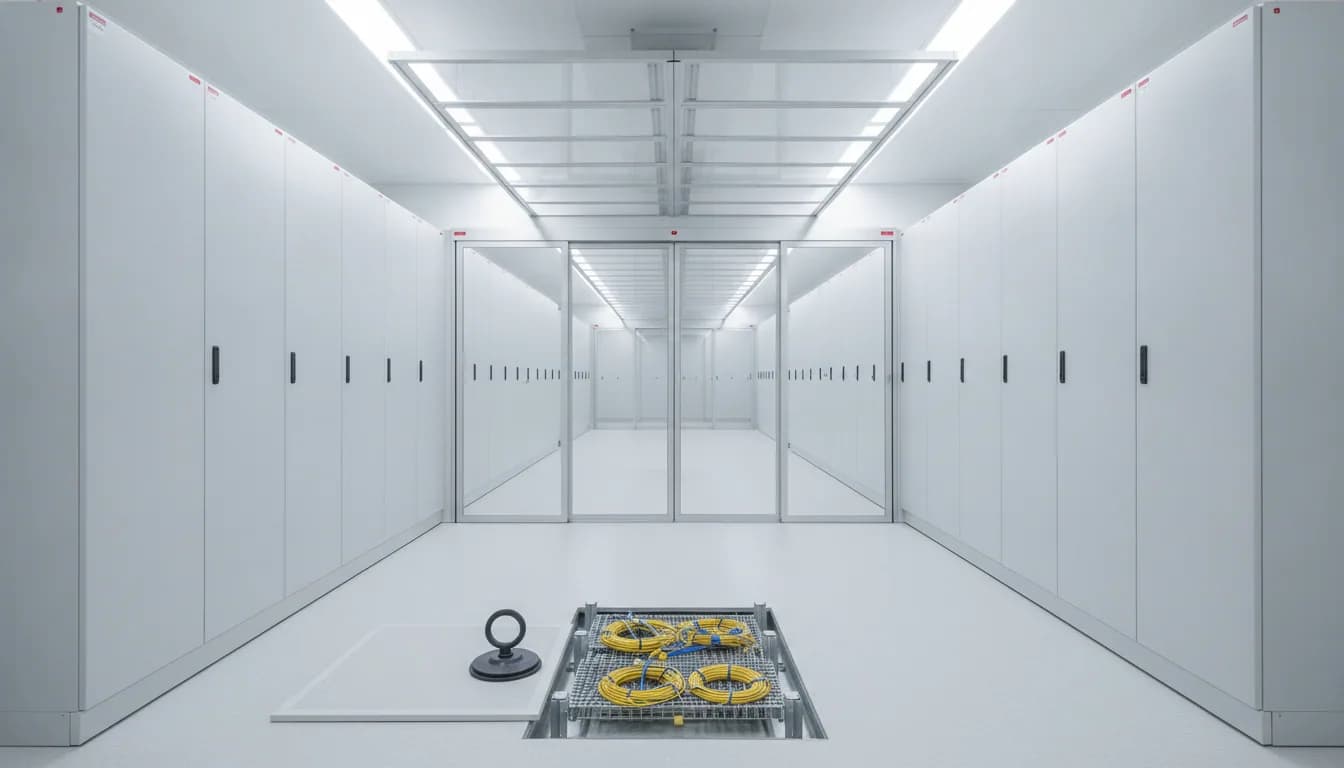
Cable management arm (CMA)
理线臂 · White space
Control status not established per item; treated as ordinary goods because the item class carries no integrated circuit that the .z paragraphs would reach. Verify before a first shipment.
What Qing asks
One dense message. Five is the whole budget per supplier reply, so the questions that decide comparability go first.
- 1.
该导轨的静载荷与动载荷各是多少kg?适配的机柜前后立柱间距范围是多少mm?适配方孔/圆孔/螺纹孔哪一种?是否通过负载循环测试?请提供测试报告。
State static and dynamic load ratings in kg, the supported front-to-rear post depth range in mm, and whether it fits square, round or threaded holes. Has it passed a load cycling test? Send the report.
The report flags this but leaves it soft. Dynamic (shipping/extended) load and static load are different numbers, and rail clone failures show up as sag under a fully populated 4U.
这批货是全新原封、官翻、拆机件还是工程样片(ES/QS)?请在形式发票上写明状态。如果是拆机件,来源和使用时长是多少?
报价是EXW、FOB还是CIF?指定口岸是哪里?报价里不含哪些费用(出口报关、内陆运输、保险、目的港费用)?
外箱尺寸多少?每箱装几台、毛重多少公斤?每托盘几箱?整单总体积多少立方米?是木托还是纸托、是否需要熏蒸证明?
请给出阶梯报价:1台、10台、50台、100台各是什么价格?每个型号的起订量是多少?价格有效期多久?
出口报关准备用哪个HS编码?报价是含税价还是不含税价?该编码的出口退税率是多少、退税是否已经体现在报价里?
整机原产地写哪里?能否出具原产地证(一般CO还是Form E/RCEP优惠证)?货物是从中国直接出口,还是经香港、新加坡或越南转运?
质保多少个月?DOA(到货即损)申报期限是几天?返修是寄回中国还是有海外备件?是否提供先行换货?返修运费谁承担?
这个托架/导轨/面板是原厂件还是兼容件?上面有没有原厂LOGO或型号标识?能否书面保证不侵犯第三方商标和专利,并承担相关责任?
整机和关键部件(CPU、加速卡、网卡)的原产地分别是哪里?产品里有没有使用美国原产的芯片、软件或技术?大概占多少比例?能不能配合签署最终用户和最终用途声明、承诺不转运?这个型号以前出口过哪些国家?
合同和发票的签约主体全称是什么?统一社会信用代码是多少?工厂是自有还是代工?母公司或控股股东是谁、持股比例多少?有没有国资或上市公司背景?
请提供公司全称、统一社会信用代码和营业执照复印件。贵司是生产工厂、原厂授权代理还是贸易商?如为工厂,工厂地址在哪里、可否安排验厂或视频验厂?开票主体与收款主体是否为同一家公司?
最小起订量是多少?请给出阶梯报价(如100/500/1000/5000片)。报价有效期多少天?NAND和HDD价格波动时如何调价?是否接受锁价?
+ 37 more universal terms
How buyers get burned here
Category-specific, from research rather than generic advice
- OEM vs fabricator vs trader. Three tiers exist and they quote the same product. Integrator-OEMs (Huawei, Envicool, KSTAR, Kehua, Yimikang, ZTE, Inspur) own the thermal/fire/electrical integration and warrant the system. True rack OEMs (Keydak, Toten, MERO-TSK) own tooling, a brand and a catalogue. Below them sit hundreds of Hebei/Ningbo/Foshan sheet-metal shops and export trading houses that will print any logo. A legal name containing 进出口 / Imp. & Exp. is a trading company. Ask for the plant address, the business licence scope, and a video walk of the powder-coat line — not a catalogue.
- Static vs dynamic load quoted interchangeably. Chinese datasheets frequently show only 静载 (static). Dynamic (rolling, loaded) rating is typically about half — Inspur's ISC-NR42 is 2450 kg static / 1250 kg dynamic. If a rack quotes '2000 kg' with no qualifier, assume it is static and that you cannot roll it loaded.
- PVC fibre raceway sold as ABS. Optical trunking (光纤槽道) is specified in ABS or PC/ABS because PVC releases chlorine over time and heavily above about 60 °C. Chinese carriers require ABS; substitution to cheaper PVC is common and invisible on delivery. Require a material certificate and a burn/FTIR test on an incoming sample.
- '沈飞' raised-floor branding is a fragmented family, not a company. Dozens of independent regional entities trade as 沈飞地板 (Chongqing, Zhuhai, Guangzhou, Shenzhen and others) with no common specification, tooling or QA. Buying '沈飞' does not identify a manufacturer. Specify the legal entity and the plant, and test-certify each source separately.
- Fire linkage left out of the containment scope. A sealed aisle is normally only permitted where the roof drops away or auto-opens on the fire alarm: electromagnets hold flaps closed, release on power loss, open within ~3 s, with openable area typically ≥60% of aisle plan area. Fabricators quoting a containment kit routinely omit the dry-contact interface and the hold-open magnets. Put the fire-linkage interface in the containment supplier's scope and make it a named line item.
- Gas suppression and a sealed roof are incompatible unless the roof releases. Where the room uses total-flooding gas, the controller must shut dampers and stop air handlers before discharge (GB 50174-2017). A fixed non-releasing containment roof both blocks agent distribution and traps it. Fixed glass roofs are only sourceable for rooms on sprinkler/pre-action with heads correctly located.
- Seismic bracing omitted from cable tray and busway. GB 50981-2014 makes seismic support mandatory (clauses 1.0.4, 5.1.4, 7.4.6) at intensity 6 and above, for cable tray and busway above roughly 150 N/m and electrical conduit ≥60 mm ID. Importers buying tray on price routinely leave the bracing out, then discover it at inspection. Price bracing per hanger point with the tray, not after.
Generated imagery — illustrative of the category, not a photograph of any supplier, facility or product on this platform.